

Custom battery pack assembly is one of the most practical and rewarding DIY electronics skills — and one of the most consequential in terms of safety when done incorrectly. A properly assembled 18650 pack with quality nickel strip connections, correctly installed insulation gaskets, and well-matched cells provides reliable, long-lasting power for tools, portable devices, and energy storage projects. An improperly assembled pack with inadequate cell insulation, cold solder joints substituted for spot welds, or mismatched cells creates a thermal runaway risk that has destroyed workshops and caused serious injuries.
AliExpress in 2026 carries the complete toolkit for professional-grade battery pack assembly at prices that make equipping a capable build station practical — from the portable spot welder that replaces soldering iron connections with proper metallurgical bonds through the nickel strip that carries current between cells, the insulation gaskets that prevent the short circuits that cause cell failures, and the storage solutions that keep assembled packs and loose cells organized and protected. After testing these products across custom power pack assembly, tool battery rebuilding, and portable power applications, we identified five that form a complete, safe, professional battery build toolkit.
Whether you are building your first custom battery pack, rebuilding a depleted tool battery, or equipping a workshop for ongoing battery assembly projects, this guide covers the tools and components that matter.

Quick Comparison: Top 5 18650 Battery Accessories

FNIRSI SWM-10 Spot Welder

18V/21V Lithium Battery for Makita
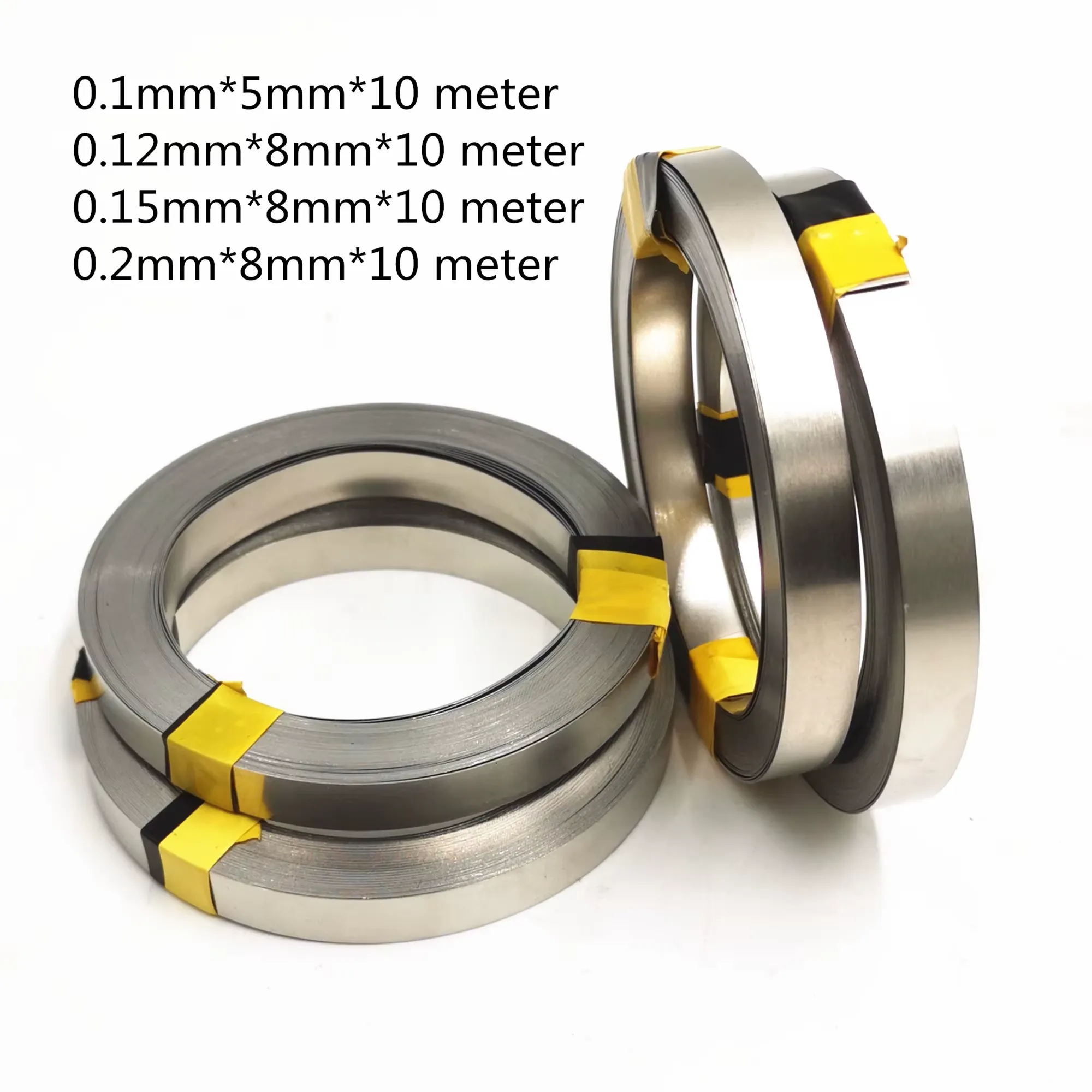
Nickel-Plated Steel Strip 10M Roll

21700 Battery Storage Case 4-Slot

18650/21700 Battery Insulation Gaskets 100pcs
Detailed Specifications Comparison
| Specification | FNIRSI SWM-10 | Makita Battery | Nickel Strip | 21700 Case | Insulation Gaskets |
|---|---|---|---|---|---|
| Product Type | Portable spot welder | Replacement tool battery | Cell interconnect material | Smart storage + power bank | Safety component — insulator pad |
| Key Spec | 5000mAh built-in battery | 18V / 21V, 2.0–6.0Ah options | 10M roll, nickel-plated steel | 4-slot, LCD display, fast charge | 100 pieces, barley paper insulation |
| Compatibility | Nickel strip up to 0.25mm | Makita tools — 18V and 21V range | 18650 and 21700 Li-Ion cells | 21700 format cells | 18650 and 21700 cells |
| Primary Function | Spot welding cell interconnects | Drop-in power tool replacement | Spot-welded cell-to-cell connection | Storage + charging + power monitoring | Positive terminal short circuit prevention |
| Safety Role | Correct join method — no solder heat | Ready-assembled safe pack | Low resistance connection | Short circuit protection + monitoring | Critical — prevents internal pack shorts |
| Rating | 4.9/5 | 4.7/5 | 4.8/5 | 4.6/5 | 4.8/5 |
Detailed Reviews: Top 5 18650 Battery Accessories
FNIRSI SWM-10 Spot Welder — Editor’s Choice
The FNIRSI SWM-10 Spot Welder earns our Editor’s Choice as the single most important tool investment for anyone building custom battery packs. The reason is fundamental: 18650 and 21700 lithium cells must never be connected with a soldering iron. Soldering applies sustained heat directly to the cell terminal — the same terminal that is thermally connected to the cell chemistry inside. Sustained heat at the terminal raises the cell’s internal temperature toward the threshold where thermal runaway begins. A cell damaged by soldering heat may function initially but has reduced thermal stability that can manifest as failure weeks or months later under load. Spot welding applies a precisely timed, high-current pulse that joins the nickel strip to the terminal in milliseconds — the weld is complete before meaningful heat can conduct into the cell body.
The 5000mAh built-in battery is the specification that makes the SWM-10 genuinely portable rather than a bench-bound tool. A spot welder powered by an external bench power supply or mains connection cannot move with the work — the SWM-10 goes where the pack assembly requires, including position adjustments that would be awkward with a tethered tool. The built-in battery capacity supports multiple full battery pack assemblies before requiring recharge, making it practical for complete build sessions without concern about mid-project power depletion. The 0.25mm nickel strip capability is the specification threshold that differentiates this welder from the entry-level options that can only handle thinner 0.1–0.15mm strip — thicker strip carries more current with lower resistance, which is directly relevant to pack performance under load.
FNIRSI is a recognized brand in the DIY electronics and battery tools space, and the SWM-10 reflects genuine understanding of hobbyist pack-building requirements — the interface is designed for quick operation rather than requiring constant parameter adjustment between welds. The limitation to hobby and small-scale production use rather than continuous industrial welding is the honest constraint of a tool at this price point, and it is entirely appropriate for the custom pack assembly and tool battery rebuilding applications that most buyers perform.
“The right tool does not just make the job easier; it makes the final product safer and more durable for long-term use.”
Key Specifications
- Built-In Battery: 5000mAh — supports multiple full pack assembly sessions per charge
- Nickel Strip Rating: Up to 0.25mm — handles thicker strip for lower resistance pack connections
- Brand: FNIRSI — recognized DIY battery tooling manufacturer with consistent quality track record
- Portability: Self-contained — no external power supply or mains connection required during welding
- Safety Principle: Millisecond pulse weld — joins nickel strip before thermal energy reaches cell chemistry
- Limitation: Hobby and small-scale production — not designed for continuous high-volume industrial welding
Best Use Cases
- Custom 18650 and 21700 battery pack assembly for e-bikes, power walls, and portable power stations
- Tool battery rebuilding — replacing depleted cells in Makita, DeWalt, and other brand packs
- Any battery project where soldering iron use on cell terminals is the current method being replaced
- Workshop environments where portability enables working with larger pack assemblies at multiple positions
- DIY power bank and portable energy storage builds requiring reliable, low-resistance cell interconnections
- First spot welder purchase — the entry point into correct battery assembly technique at accessible pricing
18V/21V Lithium Battery for Makita — Best Tool Battery
The 18V/21V Lithium Battery for Makita earns the Best Tool Battery position as the most practically useful product in this comparison for anyone running Makita tools whose original batteries have degraded or been lost. Makita is one of the most widely used professional power tool platforms globally, and the genuine Makita battery packs carry a price premium that makes replacement economics unfavorable when a tool’s original pack loses capacity — at $10.35 versus $60–90 for a genuine Makita pack, the capacity-per-dollar calculation strongly favors compatible third-party alternatives for users whose tool use does not require the warranty protection that genuine packs provide.
The 2.0Ah to 6.0Ah capacity range maps directly to different use patterns: the 2.0Ah pack is lighter and appropriate for precision tools, drills, and short-duration tasks where tool weight matters more than runtime; the 4.0Ah pack covers the general workshop range of operations including impact drivers and circular saws; the 6.0Ah unit provides maximum runtime for sustained high-draw operations like reciprocating saws and angle grinders at the cost of additional pack weight. For overhead work where tool mass directly affects operator fatigue, choosing a 2.0Ah or 3.0Ah pack over the maximum capacity option is the practical decision that reduces fatigue without meaningfully limiting most workshop sessions.
The 18650 cell-based construction is the technical foundation that makes these packs compatible with Makita’s voltage requirements while achieving the same form factor and BMS protection functionality as genuine packs. The BMS (Battery Management System) circuitry handles cell balancing, over-discharge protection, and over-temperature cutoff — the same protective functions that make lithium tool packs safe under the variable load conditions that power tool use creates. Confirming compatibility with your specific Makita tool model before purchase is the practical step that prevents fitment surprises — Makita’s tool range spans several connector variants that look similar but are not universally interchangeable.
Key Specifications
- Voltage: 18V and 21V — covers Makita’s main tool voltage platforms
- Capacity Options: 2.0Ah – 6.0Ah — light portability through maximum runtime selection
- Cell Type: 18650 lithium-ion — compatible with Makita’s electrical requirements
- BMS: Included — cell balancing, over-discharge, and over-temperature protection
- Compatibility Note: Confirm specific Makita tool model compatibility before ordering
- Weight Note: 6.0Ah pack adds weight — consider 2.0–3.0Ah for overhead and extended-hold operations
Best Use Cases
- Replacing degraded original Makita packs at a fraction of genuine battery replacement cost
- Expanding battery inventory for Makita tools where more packs reduce charging wait time on long jobs
- Workshop and job site use across Makita drills, impact drivers, circular saws, and jigsaws
- Selecting 2.0Ah capacity for lightweight precision tool and drill use where runtime is secondary to weight
- Selecting 6.0Ah capacity for sustained high-draw operations where maximum runtime reduces recharge interruptions
- Hobbyists and trades users who use Makita tools regularly but cannot justify genuine pack pricing for backup units
Nickel-Plated Steel Strip 10M Roll — Best Nickel Strip
The Nickel-Plated Steel Strip earns the Best Nickel Strip position as the essential cell interconnect material for any battery pack assembly. The material choice for cell-to-cell connections in 18650 packs matters for both safety and performance: nickel-plated steel is the standard for DIY and professional pack assembly because it spot welds cleanly, resists corrosion, and provides sufficient conductivity for the current levels consumer battery packs operate at. Pure nickel strip has lower resistance but costs significantly more — for the current levels of most custom packs, nickel-plated steel provides the correct balance of conductivity, weldability, and cost that makes it the industry standard consumable for this application.
The 10M roll length is the practical purchasing format that reflects how battery pack assembly actually consumes material: each cell connection requires a short strip section, a typical 10S3P battery pack (30 cells) requires dozens of individual strip sections of varying lengths, and projects vary in complexity. Having 10M of strip available means project planning is never constrained by material inventory — you cut what you need, and the remaining roll is ready for the next build without restocking. The roll format is easier to manage and store without tangling than pre-cut sections, and the strip cuts cleanly with household scissors or tin snips to any length required.
The nickel plating’s corrosion resistance is not merely an aesthetic feature — bare steel strip oxidizes at the weld interface over time, increasing contact resistance and potentially creating hot spots under load that degrade the pack. Nickel plating prevents this oxidation at the critical weld contact point, ensuring that the connection quality achieved at assembly remains stable throughout the pack’s service life. At $0.99 for 10 meters, this strip is the consumable that makes every other investment in this guide — the spot welder, the cells, the insulation gaskets — deliver a reliable assembled result rather than a poor-quality connection between quality components.
Key Specifications
- Length: 10M roll — sufficient for multiple complete battery pack builds without restocking
- Material: Nickel-plated steel — industry standard for spot-welded 18650 and 21700 cell connections
- Conductivity: High — designed for 18650 Li-Ion battery pack current levels
- Corrosion Resistance: Nickel plating prevents weld interface oxidation that increases resistance over time
- Cutting: Easily trimmed to any length with scissors or tin snips
- Connection Method: Spot welder required — soldering iron is not the correct joining method for cell terminals
Best Use Cases
- 18650 and 21700 custom battery pack cell-to-cell interconnections using spot welder
- Tool battery rebuilds where original nickel strip connections need replacement with fresh material
- E-bike battery pack assembly requiring reliable, low-resistance cell connections under high current draw
- Power wall and stationary energy storage pack construction at DIY scale
- Workshop stocking — 10M roll provides material inventory for multiple projects without repeated purchasing
- Essential companion purchase with the FNIRSI SWM-10 spot welder for complete pack assembly capability
21700 Battery Storage Case 4-Slot — Best Storage Case
The 21700 Battery Storage Case earns the Best Storage Case position as the most functional battery management accessory in this comparison — a case that does significantly more than prevent loose cells from rolling around a drawer. The LCD voltage display provides real-time battery health information that is genuinely useful during pack assembly and cell selection: knowing the state of charge of each of the four cells before selecting them for a build is the prerequisite for matching cells at similar charge levels, which is important for parallel group balance in a completed pack. Cells that are mismatched in charge state at assembly create balancing currents that heat the cells and reduce pack lifespan from the first moment of operation.
The fast charging port transforms the storage case into a charging solution for loose cells — eliminating the need for a separate single-cell charger for managing the spare cell inventory that battery builders accumulate. The power bank function allows the four loaded cells to power a connected device through the case’s output, which serves both as a practical portable power source and as a discharge testing method that exercises the cells through a realistic load profile. The short circuit protection circuitry within the case is the safety feature that matters most during the cell handling operations — loose cells near other cells, metal tools, and conductive surfaces are the high-risk scenario that short circuit protection addresses.
The limitation to 21700 format cells — rather than the more common 18650 — is the compatibility constraint to verify before purchasing. The 21700 cell format is increasingly common in high-capacity applications including newer e-bike batteries, power tools, and Tesla vehicle packs, but if your current cell inventory is 18650, confirm that this case fits your specific cells. 21700 cells are physically larger than 18650 and do not fit in 18650-format holders — verify cell dimensions before ordering.
Key Specifications
- Capacity: 4-slot — holds four 21700 cells simultaneously
- Display: LCD — real-time voltage monitoring for cell health and charge state assessment
- Charging: Fast charge port — charges loose cells without separate single-cell charger
- Output: Power bank function — delivers power to connected devices from loaded cells
- Safety: Short circuit protection — prevents accidental shorts during cell handling operations
- Compatibility Note: 21700 format cells only — confirm cell dimensions before ordering
Best Use Cases
- 21700 cell storage and transport with short circuit protection for workshop cell inventory
- Pre-build cell matching — LCD display shows charge state for selecting balanced cells for parallel groups
- Loose cell charging using the fast charge port without purchasing a separate dedicated charger
- Power bank use for phone and device charging using the energy stored in loose 21700 cells
- Portable testing and discharge cycling of individual 21700 cells through the power bank output
- Safe cell handling accessory for any workbench where loose cells are handled near conductive tools and surfaces
18650/21700 Battery Insulation Gaskets 100pcs — Essential Safety
The Battery Insulation Gaskets earn their position as the most safety-critical component in this comparison — a classification that their $0.99 price does not reflect but their function absolutely demands. The insulation gasket sits over the positive terminal of an 18650 or 21700 cell and creates an insulating barrier between the positive terminal and the cell body wrap at the top shoulder of the cell. This barrier addresses a specific short circuit path: when nickel strip is spot-welded across a row of cells, the strip spans from positive terminal to positive terminal, but at each cell the strip also passes over the top shoulder where, without the insulation gasket, it could contact the cell’s negative outer case and create a direct short circuit across the cell’s internal chemistry.
The barley paper material is the specification that makes these gaskets appropriate for battery pack use. Barley paper — a kraft-fiber insulation material — provides the combination of properties that cell terminal insulation requires: electrical insulation sufficient to prevent current flow between the terminal and the cell body, thermal stability across the temperature range that active battery packs operate in, and mechanical conformity that allows it to seat correctly over the terminal geometry without leaving gaps. Cheaper insulation materials may perform adequately initially but degrade at elevated temperatures, losing their insulation properties precisely when thermal conditions make insulation failure most dangerous.
The hollow electrode design — the central opening in the gasket — is not a limitation but a deliberate engineering feature: the opening allows the spot welder’s electrode to contact the positive terminal directly through the gasket for a clean weld while the gasket body insulates the shoulder area around the terminal. The 100-piece quantity provides enough gaskets for multiple complete pack builds — at $0.99 for 100 pieces, stocking these before any pack assembly begins is the correct practice. Discovering a shortage of insulation gaskets mid-assembly and proceeding without them is the safety shortcut that no cost consideration justifies.
“An ounce of prevention is worth a pound of cure, especially when dealing with high-capacity lithium cells.”
Key Specifications
- Material: Barley paper — thermally stable insulation that maintains integrity across battery operating temperatures
- Design: Hollow electrode — central opening allows spot welder electrode contact while insulating the terminal shoulder
- Compatibility: 18650 and 21700 cells — covers both standard and large format cylindrical cells
- Quantity: 100 pieces — sufficient for multiple complete pack builds without restocking
- Function: Prevents short circuit path between nickel strip and cell body at positive terminal shoulder
- Handling Note: Fine-tipped tweezers recommended for accurate placement over small terminal geometry
Best Use Cases
- Every 18650 and 21700 battery pack assembly — insulation gaskets are not optional for safe cell interconnection
- Tool battery rebuilds replacing original cells where original gaskets have been damaged or lost
- E-bike battery packs where the high current demands make internal short circuits particularly dangerous
- Power wall and stationary storage packs where long-term insulation integrity matters for years of service
- Workshop stocking — 100-piece quantity provides material for all builds without per-project purchasing
- Essential companion to the nickel strip and SWM-10 spot welder — the safety component the assembly system requires
Battery Pack Assembly Guide 2026
Building a safe, reliable custom battery pack requires understanding both the correct assembly sequence and the reason each component and technique exists — safety in battery assembly is not optional and cannot be compensated for by any other factor in the build.
Why Spot Welding Is Non-Negotiable
The single most important technique decision in battery pack assembly is using a spot welder rather than a soldering iron for cell terminal connections. This is not a quality preference — it is a safety requirement with a specific technical basis. Lithium cell chemistry is temperature-sensitive in ways that affect long-term stability: sustained heat at the cell terminal from a soldering iron conducts into the cell body and raises the temperature of the electrode and electrolyte materials. Even if the cell appears undamaged immediately after soldering, the thermal stress can create internal micro-damage to the separator material that separates the anode and cathode. A compromised separator is the precondition for internal short circuits that cause thermal runaway — a chain reaction that generates more heat than the cell can dissipate, leading to venting, fire, or explosion. Spot welding’s millisecond pulse duration completes the weld before meaningful heat conducts into the cell body.
Cell Selection and Matching
Before assembling cells into a pack, each cell should be checked for physical damage (dents, tears in the outer wrap, any deformation of the terminals), measured for voltage to confirm it is within the expected range for its stated state of charge, and for parallel groups specifically, cells should be matched within 0.05V of each other before connection. Mismatched cells in a parallel group create equalizing currents that flow between them immediately at connection — these currents generate heat proportional to the voltage difference and the combined internal resistance of the cells. The 21700 storage case’s LCD display is the tool that makes this pre-assembly voltage check practical without a separate bench meter for every cell. Quality parts and correct technique applied from the beginning produce a pack that performs reliably; shortcuts at the cell selection stage create problems that worsen with every charge cycle.
Safe Storage and Handling of Loose Cells
Loose 18650 and 21700 cells are live electrochemical devices that can deliver hundreds of amperes into a short circuit. Never store loose cells in contact with each other, with metal objects, or in a location where they could roll and contact conductive surfaces. The negative terminal is the cell body wrap — the entire cylindrical surface of the cell is at negative potential. Any conductive path between the positive terminal and the cell body is a short circuit. Store cells in a dedicated case with individual slots, transport them in plastic or cardboard holders, and inspect the outer wrap before use — a torn wrap exposes the cell body metal and creates a short circuit risk at the contact edge of the damaged area. Cells with damaged wraps should be re-wrapped or retired before use in a pack assembly.
Our Final Recommendations
For any builder assembling custom 18650 or 21700 packs, the complete toolkit from this guide represents a total investment that enables safe, professional-quality battery assembly. The FNIRSI SWM-10 Spot Welder is the anchor purchase — without it, the correct cell connection method is not available. The Nickel-Plated Steel Strip and Insulation Gaskets at $0.99 each are the consumables that the spot welder requires to produce a safe, complete assembly. Together, these three items form the complete cell-level assembly toolkit.
The Makita-Compatible Battery Pack is the alternative for Makita users who need additional packs immediately without building from scratch — the ready-assembled solution at a fraction of genuine battery pricing. The 21700 Storage Case adds the voltage monitoring and safe storage capability that every cell inventory benefits from, at a price that makes it an obvious addition to any battery builder’s bench. Together, these five products cover every stage of the battery assembly workflow from cell storage and selection through spot-welded pack assembly — with safety as the non-negotiable foundation of every step.


![Best versatile tools from AliExpress [year] including cordless vacuum magnetic pick-up and socket set on a workshop workbench](https://bestfindo.com/wp-content/uploads/2026/04/best-versatile-tools-from-aliexpress-2026.jpeg)
![Best cordless brushless power tools from AliExpress [year] including drills and circular saw on a workshop workbench](https://bestfindo.com/wp-content/uploads/2026/04/best-power-tools-from-aliexpress-2026-drills-saws-more.jpeg)