

The tools that earn a permanent place on a workshop bench are rarely the most expensive or the most specialized — they are the ones that solve problems that come up repeatedly across different projects, in different contexts, and at moments when having exactly the right tool saves significant time and frustration. A cordless vacuum that runs on the same batteries already powering your other tools. A precision gauge accurate to ±0.001 inch for the tolerance checks that rough measuring cannot resolve. A telescopic magnetic pick-up that retrieves the dropped fastener from the location that would otherwise require a twenty-minute disassembly. Each of these is the kind of tool that pays for itself the first time it solves a problem that would otherwise have taken an hour to work around.
AliExpress in 2026 carries a genuinely strong range of versatile workshop and automotive tools at prices that make equipping a complete practical toolkit accessible without the overhead that branded retail carries. After testing these tools across workshop cleanup, precision measurement, automotive work, and mechanical maintenance, we identified five products that deliver consistent, practical value across the situations each is designed for.
Whether you are filling specific capability gaps in an existing workshop, setting up a first practical automotive toolkit, or looking for the time-saving tools that experienced mechanics and DIYers consider essential, this guide covers the five versatile tools that earn consistent daily use.

Quick Comparison: Top 5 Versatile Tools
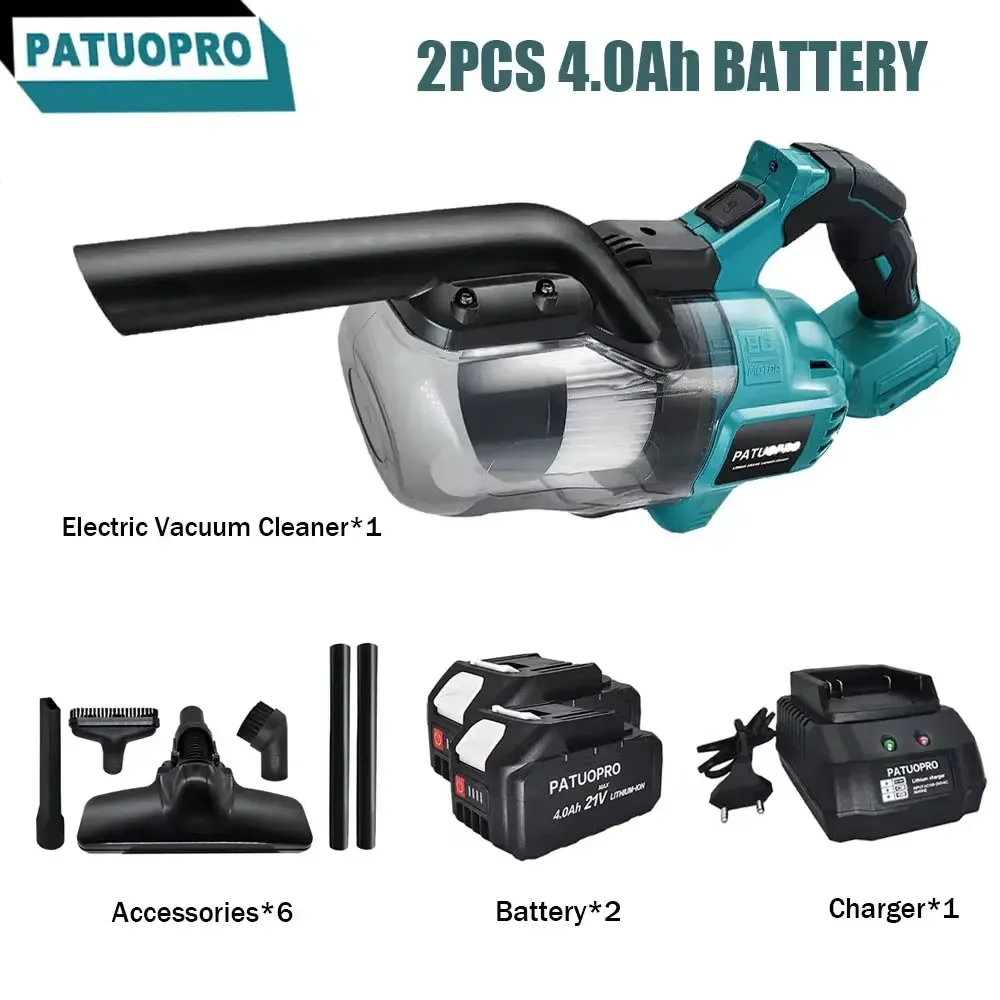
Cordless Handheld Vacuum — Makita 18V

Precision Needle Gauge ±0.001

Telescopic Magnetic Pick-Up Tool

NAIERDI 6.5″ Car Door Opening Kit

3/8″ Drive 6-Point Deep Socket Set 8–24mm
Detailed Specifications Comparison
| Specification | Cordless Vacuum | Precision Gauge | Magnetic Pick-Up | Door Opening Kit | Deep Socket Set |
|---|---|---|---|---|---|
| Tool Category | Cordless vacuum — handheld | Precision measuring instrument | Magnetic retrieval tool | Automotive entry kit | Deep socket set — mechanic |
| Key Spec | Makita 18V battery compatible | ±0.001 inch accuracy, digital LCD | Telescopic reach, magnetic tip | Air wedge pump + slim tools | 8–24mm, 3/8″ drive, 6-point |
| Material | ABS body, motor assembly | Hardened steel, digital display | Steel shaft, neodymium magnet | Non-marring materials | Chrome vanadium or alloy steel |
| Battery / Power | Makita 18V (battery not included) | Battery-powered display | No power required | No power required | No power required |
| Primary Use | Workshop cleanup — dust, chips, debris | Precision measurement and tolerance checking | Fastener retrieval in tight spaces | Car door opening, window adjustment | Deep-recessed bolts, engine work |
| Rating | 4.8/5 | 4.8/5 | 4.7/5 | 4.7/5 | 4.7/5 |
Detailed Reviews: Top 5 Versatile Tools
Cordless Handheld Vacuum — Makita 18V Compatible — Editor’s Choice
The Makita 18V-compatible Cordless Handheld Vacuum earns our Editor’s Choice for a reason that goes beyond its vacuum performance alone: it extends the value of a battery platform investment that most Makita tool users have already made. The Makita 18V LXT platform is one of the most widely adopted cordless tool ecosystems globally — a user who owns Makita drills, impact drivers, and saws has a collection of 18V batteries that charge on the same chargers and swap between tools seamlessly. Adding a vacuum that runs on those same batteries means getting a new tool capability without adding a new battery system, a new charger, or new storage requirements. The true cost of the vacuum is the purchase price of the body alone — the energy infrastructure is already on the bench.
The practical workshop application of a handheld cordless vacuum justifies this tool’s position as an everyday-use item rather than an occasional accessory. Sawdust accumulation on workpieces, metal shavings around drilling operations, wood chips on assembly surfaces — all of these require cleaning between operations for quality work, and a corded vacuum requires finding and managing an extension cable while a handheld cordless tool is retrieved and used in seconds. The absence of a cable is what makes this vacuum genuinely fast to use rather than a tool that is technically available but in practice inconvenient enough to skip between operations. On concrete workshop floors, bare workbench surfaces, and carpeted areas alike, the suction handles the debris types that workshop operations generate.
The battery not included specification is the honest purchasing condition to note — this vacuum requires a Makita 18V battery that must be purchased separately if not already owned. For existing Makita users, this is a non-issue; for buyers without a Makita battery, the total acquisition cost increases accordingly. The lightweight body design reduces fatigue during extended cleanup sessions, and the form factor reaches into the confined areas and corners that shop vac hoses and upright vacuums cannot access without repositioning the machine.
“A clean workspace is the foundation of every successful project, and having the right suction power makes all the difference.”
Key Specifications
- Battery Platform: Makita 18V LXT — uses existing battery inventory without new charger investment
- Battery Status: Not included — existing Makita 18V pack required for operation
- Application: Concrete floors, workbench surfaces, and carpeted areas
- Form Factor: Handheld — lightweight body reaches confined areas without cable management
- Debris Handling: Sawdust, wood chips, metal shavings, and general workshop debris
- Noise: Audible at high-power settings — relevant for extended shared-space use
Best Use Cases
- Between-operation workshop cleanup for sawdust and chips without retrieving a corded shop vac
- Job site cleanup in locations without convenient power access where a corded vacuum is impractical
- Workbench debris clearing before assembly or finishing operations requiring clean surfaces
- Vehicle interior cleanup using the same 18V battery already powering other automotive tools
- Confined space cleanup in engine bays and cabinets where upright vacuums cannot access
- Makita 18V platform users who want vacuum capability without adding a second battery ecosystem
Precision Needle Gauge ±0.001 Accuracy — Best Measuring Tool
The Precision Needle Gauge earns the Best Measuring Tool position as the instrument that resolves the measurement problem that standard rules, calipers, and tape measures leave unsolved — the consistent verification of dimensional tolerances at ±0.001 inch resolution. In mechanical work, a gap, clearance, or fit that measures “approximately correct” is frequently the root cause of premature wear, poor assembly performance, and unexplained mechanical failures. Engine valve clearances measured in thousandths of an inch, bearing fits that must be verified against specification before assembly, surface flatness on precision machined components — these are the measurements that require an instrument calibrated to this resolution, and a needle gauge at ±0.001 accuracy is the appropriate tool for making them reliably.
The digital LCD display converts the analog dial gauge interpretation that traditional needle gauges require into a direct numerical readout that eliminates the interpolation error that reading between scale divisions introduces. At ±0.001 inch resolution, the difference between 0.004 inches and 0.005 inches is the difference between an in-specification and out-of-specification engine valve clearance — an error that analog gauge reading can easily introduce and that digital display eliminates. The hardened steel construction provides the dimensional stability that precision instruments require — the measuring tip and reference surfaces must maintain their geometry through the mechanical contact of measurement operations without the wear or deformation that softer materials would develop over time.
The customizable calibration feature allows zero-setting against a known reference surface before measurement sequences, which is the standard practice for removing systematic error from precision gauge measurements. A steady hand during contact with the measured surface is the technique requirement — the reading represents the actual surface geometry only when the measuring tip contacts the surface without lateral force that would deflect the indicator. The digital display’s sensitivity to extreme temperature changes is the physical limitation that reflects the thermal expansion characteristics of the steel components — in normal workshop temperature ranges this is not a practical concern, but operating in very cold or very hot environments warrants allowing the gauge to temperature-equilibrate before critical measurements.
Key Specifications
- Accuracy: ±0.001 inch — resolves the tolerance measurements that standard instruments cannot make reliably
- Display: Digital LCD — direct numerical readout eliminates analog scale interpolation error
- Construction: Hardened steel — maintains measuring tip geometry through repeated contact operations
- Calibration: Customizable zero-set — removes systematic error before measurement sequences
- Technique: Steady hand required — lateral contact force deflects indicator and introduces reading error
- Temperature Note: Avoid extreme temperature operation — allow temperature equilibration before critical measurements
Best Use Cases
- Engine valve clearance verification requiring consistent ±0.001 inch tolerance measurement
- Bearing and bushing fit measurement before assembly to confirm dimensional specifications
- Surface flatness verification on precision machined components and mating faces
- Tool and fixture alignment where part position must be confirmed to close tolerance
- Quality control measurement of machined parts against dimensional specifications
- Any measurement task where “approximately correct” is insufficient and numerical precision is required
Telescopic Magnetic Pick-Up Tool — Best Retrieval Tool
The Telescopic Magnetic Pick-Up Tool earns the Best Retrieval Tool position as the tool that converts one of the most frustrating workshop and automotive experiences — dropping a small fastener into an inaccessible location — from a potentially hour-long disassembly problem into a two-second resolution. The scenario is universal: a bolt or washer falls into an engine bay, behind a panel, under furniture, or into a deep enclosure where fingers cannot reach and conventional tools cannot grip. Without a telescopic magnetic retrieval tool, the only options are disassembly or leaving the fastener in place and hoping it doesn’t cause problems — neither acceptable on precision assemblies. With a magnetic pick-up, the solution requires only extending the tool and guiding the tip to the fastener’s location.
The telescopic mechanism is what makes this tool genuinely useful rather than merely convenient — the extended reach covers the depth of engine bays, the internal dimensions of furniture and cabinet frames, the spaces behind and beneath machinery, and any other location where the fastener’s resting position is beyond arm’s reach. The magnetic tip attracts ferrous metal fasteners on contact, holding them securely through the retraction and extraction motion. The force of a quality neodymium magnet is sufficient for standard hardware fasteners including the heavy M10 and M12 bolts that appear in engine and structural assembly. Models with a built-in LED illuminate dark recesses — engine bays particularly benefit from this addition, where the fastener is often visible on a lit surface but invisible in shadow without supplementary lighting.
The pocket clip and compact closed form means this tool lives in a shirt pocket or tool pouch rather than taking up drawer space — making it available immediately in the situations where it is needed most rather than requiring a separate trip to retrieve it. The honest limitation is ferrous metal specificity: aluminum, brass, plastic, and other non-ferrous fasteners are not retrievable magnetically. For these materials, a flexible grabber tool or an adhesive-tipped pick-up provides the non-magnetic retrieval capability that complements this magnetic version. At $0.99, stocking both magnetic and mechanical retrieval options is entirely practical.
“The right tool does not just save time; it saves your sanity when the smallest parts decide to disappear into the abyss of your workspace.”
Key Specifications
- Design: Telescopic — extends to reach engine bays, cabinet interiors, and deep enclosures
- Tip: Magnetic — attracts and holds ferrous metal fasteners on contact
- Collapsed Size: Pocket-compatible — pocket clip for shirt or tool pouch carry
- Optional Feature: LED models available — illuminate dark recesses during fastener location
- Limitation: Ferrous metals only — steel and iron fasteners; aluminum, brass, and plastic not retrievable
- Heavy Bolt Note: Very large or heavy bolts may exceed magnetic pull strength of smaller diameter models
Best Use Cases
- Engine bay fastener retrieval where dropped bolts land on inaccessible surfaces between components
- Furniture and cabinet assembly where screws fall into frame interiors beyond finger reach
- Electronics work where dropped screws disappear into device interiors during disassembly
- Plumbing and HVAC work in wall cavities and service spaces where fasteners are easily lost
- Any workshop or automotive situation where a dropped ferrous fastener in an inaccessible location would otherwise require disassembly
- Permanent shirt pocket or tool pouch tool — always available at the moment a fastener is dropped
NAIERDI 6.5″ Car Door Opening Kit — Best Auto Kit
The NAIERDI 6.5″ Car Door Opening Kit earns the Best Auto Kit position as the automotive tool that addresses one of the most expensive and stressful vehicle emergencies — being locked out of your car without access to keys — while also serving the legitimate maintenance role of window seal adjustment and interior access during repair work. The kit’s value is asymmetric: it is purchased once at under a dollar, stored in the glove box or garage, and pays for itself instantly the first time it saves a locksmith call-out fee that typically runs $75–200 depending on location and time of day. The alternative to owning this kit is either paying professional locksmith rates or waiting hours for roadside assistance.
The air wedge pump mechanism is the engineering element that makes this kit work without damaging vehicle finish. The inflatable wedge is inserted in the narrow gap between the door top and the door frame — a location where the door seal is compressible and the gap can be opened slightly without stressing the door frame geometry. Inflating the wedge creates a small controlled gap that allows the slim-profile reaching tools included in the kit to enter the vehicle interior and operate the lock mechanism, window control, or door handle. The non-marring design of both the air wedge and the slim tools protects paint and trim from the scratching and denting that improvised metal tools — coat hangers, screwdrivers — cause and that professional locksmiths charge premium rates to avoid.
The legitimate maintenance applications of this kit beyond lockout situations include window seal adjustment, interior trim panel manipulation, and the kind of fine-tuning door mechanism work that requires access to the inside of a closed door without full door card removal. The compact kit size stores comfortably in a glove box, center console, or garage shelf without occupying meaningful space. Patience and a steady approach are the technique requirements — forcing the air wedge too aggressively or using the slim tools with excessive force creates exactly the panel and trim damage the non-marring design is intended to prevent.
“The right tool for the job is not just about power; it is about the precision to perform a task without leaving a trace.”
Key Specifications
- Brand: NAIERDI — automotive entry tool specialist
- Size: 6.5″ — compact form for glove box and garage shelf storage
- Key Component: Air wedge pump — creates controlled, non-damaging gap at door-to-frame junction
- Tool Design: Non-marring slim profile — protects paint and trim from damage during operation
- Technique: Steady, patient approach — forcing tools aggressively defeats non-marring protection
- Application Scope: Most standard passenger vehicles — not for all makes and models equally
Best Use Cases
- Vehicle lockout situations where keys are inside the locked car and locksmith service is unavailable or too costly
- Window seal adjustment and interior door mechanism tuning requiring controlled access to a closed door
- Automotive body shop and detail work accessing door interiors without full panel removal
- Emergency tool stored in every vehicle where lockout risk makes preparation worthwhile
- Home mechanics performing door latch, window regulator, and interior trim work on their own vehicles
- Any situation requiring interior door access without the damage risk of improvised tools
3/8″ Drive 6-Point Deep Socket Set 8–24mm
The 3/8″ Drive 6-Point Deep Socket Set completes this comparison as the foundational mechanic’s socket set for the specific access problem that standard-depth sockets cannot solve — fasteners that are recessed into a housing, sitting on long threaded studs, or positioned in locations where the bolt shank extends far below the hex head. Engine work encounters these constantly: spark plugs, cylinder head bolts, engine mount studs, and suspension fasteners all require depth in the socket that standard sockets cannot provide. A standard socket that seats fully against the hex head but does not reach far enough to clear the surrounding recess simply cannot engage the fastener — and the deep socket’s extended barrel is what makes the difference between a fastener that can be reached and one that cannot.
The 6-point design is the socket geometry specification that matters most for high-torque work. A 6-point socket contacts the flat faces of a hex fastener — the strongest part of the bolt or nut geometry. A 12-point socket contacts the corners, concentrating force at the weakest points and making rounding of the fastener corners more likely under high torque. For the engine work, suspension fasteners, and accumulated-rust fasteners that deep socket applications typically involve, 6-point contact provides the grip integrity that prevents the rounded fastener head that makes subsequent removal far more difficult. The choice of 6-point over 12-point is the standard recommendation for any high-torque or stuck fastener removal.
The 8mm to 24mm size range covers the metric fastener sizes that appear in automotive, machinery, and heavy equipment maintenance — M5 through M14 bolt sizes map into this socket range for head dimensions. The 3/8″ drive connects this set to the standard ratchet handle, extension bar, and torque wrench infrastructure that most workshops already have, and provides the torque range appropriate for the fastener sizes in the set. The full set weight is a consideration for portable tools kits where total carry weight matters, and individual socket organization benefits from a holder or labeled case that prevents the larger sockets from rolling loose in a drawer.
Key Specifications
- Drive: 3/8 inch — compatible with standard ratchet handles, extensions, and torque wrenches
- Socket Geometry: 6-point — contacts flat faces for grip security, prevents corner rounding under high torque
- Size Range: 8mm – 24mm — covers M5 through M14 metric fastener head dimensions
- Profile: Deep — extended barrel clears recessed housings and long threaded studs
- Weight: Full set is heavy — consider organized storage to prevent individual sockets rolling loose
- Application: Engine work, suspension, spark plugs, and any fastener with depth or stud clearance requirements
Best Use Cases
- Spark plug removal and installation requiring deep socket profile to clear the plug well recess
- Engine cylinder head bolt work where bolt depth and housing recesses require deep socket clearance
- Suspension fasteners on long studs where standard sockets cannot seat fully on the nut
- Machinery and equipment maintenance with recessed fasteners in housings and mounting flanges
- Rust-seized fastener removal where 6-point contact minimizes rounding risk under high breakaway torque
- Any automotive or mechanical task where standard-depth sockets consistently fail to reach the fastener
Versatile Tools Buying Guide 2026
Building a toolkit around versatile tools requires understanding the difference between tools that are versatile by design — like a universal socket — and tools that become versatile through platform integration, like a vacuum that runs on batteries you already own. Both types earn their place, but through different value mechanisms.
Platform Integration — The Hidden Value of Battery Compatibility
Battery platform compatibility is one of the most underappreciated value factors in cordless tool purchasing. The Makita 18V vacuum demonstrates this clearly: its price reflects only the tool body cost because the energy infrastructure — batteries, charger, storage — is already paid for and present. A tool that requires its own proprietary battery adds the full cost of a battery and charger to the purchase even when those line items are not explicitly listed. When building or expanding a cordless tool collection, concentrating purchases within a single battery platform multiplies the value of each battery purchased — the same pack that powers a drill can power an impact driver, circular saw, vacuum, and light, with the charger and storage cost shared across all of them. Before adding a new cordless tool, checking whether a platform-compatible version exists is the purchasing discipline that reduces total long-term toolkit cost.
Evaluating Tool Quality When Buying Online
The most reliable quality indicators for tools purchased online are verified buyer photos and reviews that describe performance over time rather than immediately after receipt. A tool that photographs well can still perform poorly under load or fail quickly — but a review that describes consistent performance through six months of regular use, or specifically mentions the failure mode that caused disappointment, is the kind of information that photographs cannot provide. For precision tools like the needle gauge, look for reviews that mention calibration verification against a known reference — this indicates a buyer who actually uses the tool for its precision function rather than for occasional light measurement. For mechanical tools like sockets and wrenches, look for reviews mentioning high-torque use and stuck fastener removal — the stress conditions that separate durable construction from adequate-looking construction are those operations. Material specifications in the product listing matter less than confirmed field performance in the application you intend.
Organising a Versatile Toolkit for Maximum Utility
The most useful toolkit is not the largest toolkit — it is the one where every item is immediately accessible when needed and clearly organized so the correct tool is found in seconds. Deep socket sets benefit from a holder with labeled slots — sockets without organization migrate to the wrong positions and require sorting before use. Precision instruments like the needle gauge should be stored in a dedicated case away from impact and vibration that could affect calibration. Small retrieval tools like the magnetic pick-up and small automotive kits like the door opening set are best stored in consistent locations — a tool that is stored inconsistently is a tool that is not available at the moment it is needed. The Makita vacuum and its battery should be stored together to ensure the battery is charged and ready for the next cleanup session rather than discovered depleted at the start of a project.
“Quality is never an accident; it is always the result of high intention, sincere effort, intelligent direction and skillful execution.”
— William A. Foster
Our Final Recommendations
For Makita 18V platform users, the Cordless Handheld Vacuum is the immediate purchase that adds a new capability to an existing battery investment. The Precision Needle Gauge at $45.60 is the instrument for anyone whose work involves tolerance measurement — the tool that converts guesswork into confirmed-correct assembly. The Telescopic Magnetic Pick-Up at $0.99 is the shirt-pocket tool that every mechanic and workshop user should carry as a matter of practice.
The NAIERDI Door Opening Kit at $0.99 is the emergency automotive tool that earns its cost back immediately in the lockout situation it prevents from becoming a locksmith bill. The Deep Socket Set at $0.99 provides the recessed fastener access and 6-point grip integrity that engine and suspension work requires where standard sockets consistently fall short. Together these five tools address cleanup, precision measurement, retrieval, automotive access, and deep fastener work — five common workshop problems solved with a combined investment that reflects the genuine value available from AliExpress in 2026.

![Best hand tools from AliExpress [year] including pliers wrenches and bench vise on a workshop workbench](https://bestfindo.com/wp-content/uploads/2026/04/best-hand-tools-from-aliexpress-2026-pliers-wrenches-more.jpeg)
![Best 18650 battery accessories from AliExpress [year] including spot welder nickel strip and storage cases on workshop bench](https://bestfindo.com/wp-content/uploads/2026/04/best-18650-batteries-accessories-from-aliexpress-2026.jpeg)
![Best precision screwdriver sets from AliExpress [year] displayed on an electronics repair workbench](https://bestfindo.com/wp-content/uploads/2026/04/best-precision-screwdriver-sets-from-aliexpress-2026.jpeg)
![Best cordless brushless power tools from AliExpress [year] including drills and circular saw on a workshop workbench](https://bestfindo.com/wp-content/uploads/2026/04/best-power-tools-from-aliexpress-2026-drills-saws-more.jpeg)