
My name is Victor, and I’ve been cycling seriously since 2014 — that’s when I bought my first real road bike and never looked back. Now, with a new adventure on the horizon, I decided it was time to build a completely custom setup from scratch.
The idea came after I bent my frame in a crash. Rather than buying off the shelf, I wanted something built specifically around me — my geometry, my riding style, my taste. Since many European component suppliers had pulled back from the market, I turned to AliExpress. What followed was a months-long build project that taught me a lot about sourcing quality parts on a budget.
Here’s exactly what I used, what I learned, and how you can do the same. After a full season and the start of another, this bike has been everything I hoped for — responsive, reliable, and built exactly to my spec.
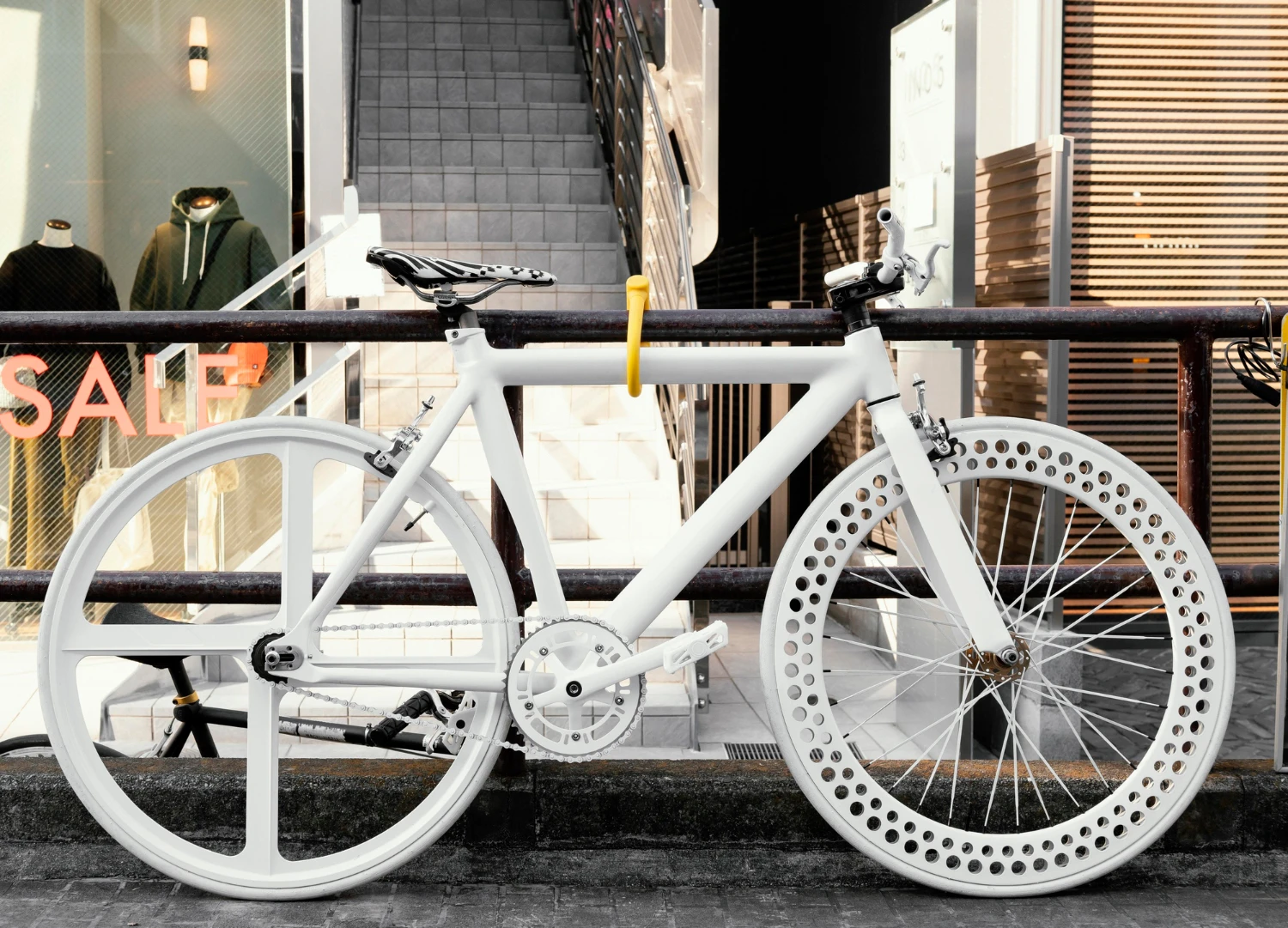
Quick Comparison: All 11 Components
BXT Carbon Road Frame
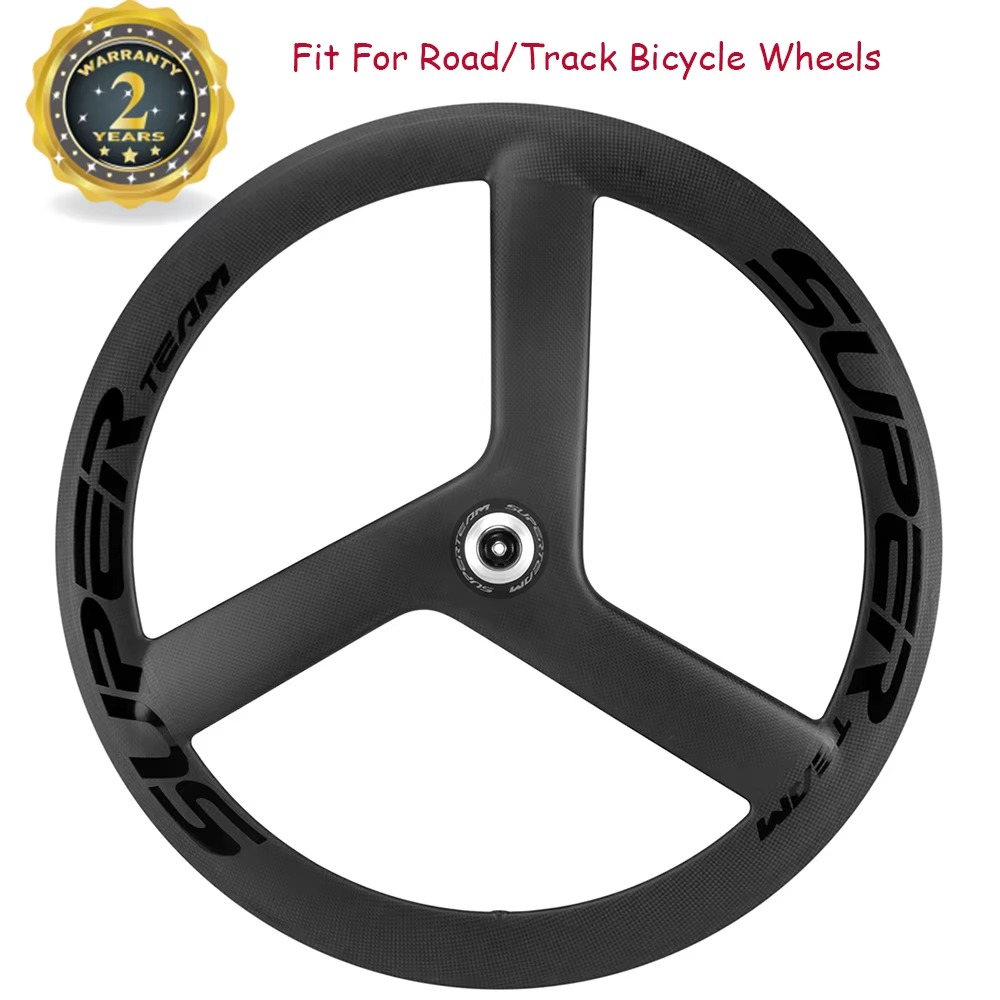
SUPERTEAM Carbon Front Wheel

38mm Carbon Wheelset

INTRO7 Aluminum Crankset + Bottom Bracket

Stem-Mount Cycling Computer Bracket
USB-C Rechargeable Rear Bike Light
Shimano Road Cycling Shoes
Build Components at a Glance
| Component | Category | Price | Key Feature | Rating |
|---|---|---|---|---|
| BXT Carbon Road Frame | Frame | $665 | Carbon fiber, 54cm sizing | 4.8/5 |
| SUPERTEAM Carbon Front Wheel | Wheel | $274 | Carbon clincher, lightweight | 4.7/5 |
| 28-Spoke Carbon Rear Rim | Wheel | $132 | Under 900g, clean weave | 4.6/5 |
| 38mm Carbon Wheelset | Wheel | $255 | 38mm deep, 25mm internal | 4.7/5 |
| INTRO7 Crankset + Bottom Bracket | Drivetrain | $85 | 165mm arms, BB included | 4.6/5 |
| IZUMI x MASH SF Track Chain | Drivetrain | $19 | Track-proven collab chain | 4.7/5 |
| Stem-Mount Computer Bracket | Accessory | $6 | Ultralight dual-mount | 4.5/5 |
| USB-C Rear Bike Light | Accessory | $5 | Quick-release, custom animation | 4.6/5 |
| Carbon Stem Spacer Set | Accessory | $1.88 | Carbon, position fine-tuning | 4.5/5 |
| Full-Zip Cycling Jersey | Kit | $22.53 | Graphic print, full-zip | 4.5/5 |
| Shimano Road Cycling Shoes | Kit | $210 | Clipless, stiff sole, size up | 4.7/5 |
The Full Build: Every Component Reviewed
The Frame
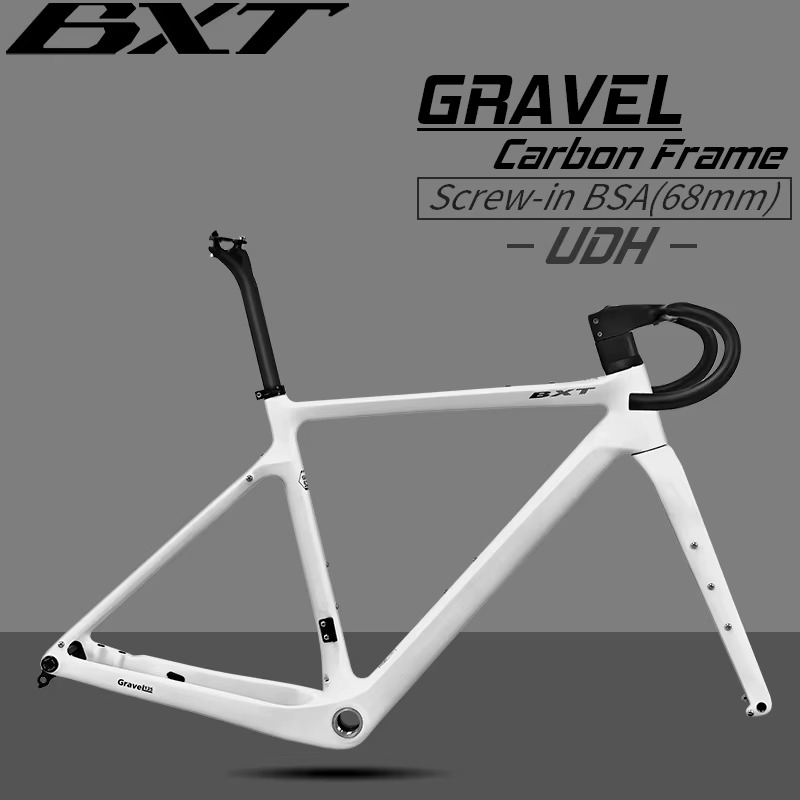
Every build starts with the frameset — the frame and fork together set the geometry, handling character, and upper limit of what the finished bike can become. I went with a carbon frame from BXT, purchased through their official AliExpress store. The reviews were solid across the board: riders were using it for everything from casual builds to budget track setups used in actual training and competition. It fit comfortably within my budget without forcing me to cut corners elsewhere.
One honest caveat: this frame isn’t dramatically lighter than a quality aluminum alternative. That said, the stiffness and ride feel more than make up for it at this price point. The carbon layup translates road vibration differently than aluminum — there’s a liveliness to the handling that a comparable alloy frame doesn’t replicate. I’m 6’1″ and sized up to a 54cm frame, which turned out to be exactly right once I dialed in the stem height and saddle position. The fork finish and cable routing are clean out of the box with no adjustments needed.
At $665, this is the largest single investment in the build — and rightly so. The frame is the component you live with longest, and getting it right from the beginning determines everything that follows. BXT’s reputation within the fixed-gear and budget road build community is earned: the quality control is consistent and the geometry is genuinely rideable, not just presentable in photos.
Key Specifications
- Material: Carbon fiber frame and fork — stiffness and ride feel over comparable aluminum
- Sizing tested: 54cm — correct fit for 6’1″ rider after stem height and saddle position adjustment
- Finish: Clean out of the box — cable routing and fork finish require no adjustment
- Source: BXT official AliExpress store — consistent QC across production batches
- Weight note: Not dramatically lighter than quality aluminum — advantage is stiffness and ride character
- Community use: Fixed-gear builds, budget road builds, training and competition setups
Best Use Cases
- Custom road bike builds where Western brand pricing is out of reach but carbon quality is the goal
- Fixed-gear and single-speed builds requiring clean geometry and reliable carbon construction
- Budget racing and training setups where riders know their geometry and want a no-frills platform
- Replacement frames after crash damage where off-the-shelf options don’t match riding preferences
The Wheels
For the front wheel, I went with a carbon clincher from SUPERTEAM. The advantages track closely with the frame: reasonable weight, genuine durability, and a look that would cost twice as much from a Western brand. There really isn’t a comparable alternative at this price. SUPERTEAM has built a solid reputation in the budget carbon wheel segment — the braking surface finish is consistent and the rim profile is aerodynamically effective without the depth penalty that makes deep-section wheels unwieldy in crosswinds.
At $274, this is the front wheel for a rider who wants genuine carbon performance without paying the brand premium that Zipp, Enve, or Hunt adds to the price. The spoke tension on arrival was even and required only minor truing — less setup time than most budget wheels demand. The carbon clincher configuration works with standard road tubes and tires, making maintenance and flat repair straightforward on any ride.
Key Specifications
- Construction: Carbon clincher — standard road tube and tire compatibility
- Spoke tension: Even on arrival — minor truing only, less setup than typical budget wheels
- Braking surface: Consistent carbon finish — effective with standard carbon-specific brake pads
- Brand reputation: SUPERTEAM — established budget carbon wheel segment presence
Best Use Cases
- Custom road builds where carbon wheel aesthetics and performance are required at accessible pricing
- Training and recreational road riding where Western brand pricing is difficult to justify
- Front wheel upgrade on existing road bikes to gain carbon performance without full wheelset cost
28-Spoke Carbon Rear Rim

For the rear, I built around a 28-spoke carbon rim with a clean carbon weave texture. It came in just under 900 grams — a solid number for a budget rear build. The 28-spoke count strikes the right balance between lateral stiffness under pedaling load and the weight benefit that fewer spokes provide. A rear wheel takes significantly more structural stress than the front — it carries the majority of the rider’s weight, handles all the drivetrain torque, and absorbs road impacts asymmetrically — making spoke count and rim strength the critical variables in rear wheel selection.
The carbon weave texture on this rim is genuine rather than a cosmetic overlay — the construction quality holds up across road surfaces including light gravel and packed dirt. At $132, this rim delivers what most riders actually need from a rear carbon wheel: adequate stiffness, reasonable weight, and durability that justifies the price over a sustained riding season rather than just for photographs.
Key Specifications
- Spoke count: 28 — balance of lateral stiffness and weight benefit over higher spoke counts
- Weight: Under 900g — competitive for budget carbon rear rim category
- Surface: Clean carbon weave texture — genuine construction, not cosmetic overlay
- Durability: Holds up across road surfaces including light gravel and packed dirt
Best Use Cases
- Custom rear wheel builds where budget limits full carbon wheelset investment
- Training wheels where durability across varied surfaces matters more than maximum weight savings
- Riders building their own wheels who want carbon rim quality without boutique pricing
38mm Carbon Wheelset — Gravel Pick
I have a pair of 38mm-deep carbon wheels with a 25mm internal width sitting in my wishlist for a gravel project — and after the experience with the SUPERTEAM front wheel, these are the obvious next step. The 38mm depth hits the sweet spot of aerodynamic benefit without the handling compromise that deeper sections impose in gusty conditions. The 25mm internal width is the specification that matters most for a gravel application — wider internal width supports wider tires at lower pressures, enabling the comfort and traction that gravel riding demands without the tire squirm that narrower rims produce with wide tires.
At $255 for a full wheelset, this represents exceptional value for a carbon set with modern internal width specifications. A comparable wheelset from a Western brand at this internal width and depth would cost three to four times as much. The 38mm depth works for road riding as well as gravel — making these wheels a versatile platform rather than a single-use gravel build.
Key Specifications
- Rim depth: 38mm — aerodynamic benefit without deep-section crosswind handling penalty
- Internal width: 25mm — supports wide gravel tires at low pressure without squirm
- Configuration: Full wheelset — front and rear included at $255
- Versatility: Road and gravel compatible — modern width specification works across tire ranges
Best Use Cases
- Gravel builds requiring wide internal width to support 40mm+ tires at gravel-appropriate pressures
- Road builds where a single wheelset must handle both smooth road and occasional gravel or dirt
- Budget all-road builds where the $255 full wheelset price enables carbon quality across the full tire range
Crankset and Chain
INTRO7 Aluminum Crankset with Bottom Bracket — Best Drivetrain
For the drivetrain, I chose an aluminum crankset from INTRO7 in a 165mm arm length. The set came with a bottom bracket included, which saved me a separate search and made installation straightforward — a detail that matters when you’re managing a multi-component build across different suppliers and delivery timelines. The power transfer feels crisp, and for a fixed-gear or single-speed build, this is a genuinely capable choice that requires no compromise on the riding feel.
The 165mm arm length suits riders in the 5’9″ to 6’2″ height range as a neutral starting point — shorter than the 170mm standard on many road cranks, which reduces the arc of motion through each pedal stroke and can benefit riders with knee clearance or pedaling style considerations. The bottom bracket inclusion eliminates a common sourcing problem in custom builds: finding a BB that correctly matches the frame shell threading, the spindle interface, and the crankset specification simultaneously. Here, that compatibility question is answered by the manufacturer.
Key Specifications
- Brand: INTRO7 — fixed-gear and single-speed drivetrain specialist
- Arm length: 165mm — suits riders 5’9″ to 6’2″ as neutral starting point
- Includes: Bottom bracket — eliminates compatibility search across frame shell and spindle specifications
- Material: Aluminum — reliable stiffness-to-weight ratio for the price
- Application: Fixed-gear and single-speed — not a geared drivetrain component
Best Use Cases
- Fixed-gear and single-speed custom builds where a complete crankset-and-BB package simplifies sourcing
- Budget road builds where aluminum crankset quality at $85 is appropriate for the overall build tier
- Riders who have had knee issues and want to test a shorter arm length before committing to a custom fit
IZUMI x MASH SF Track Chain
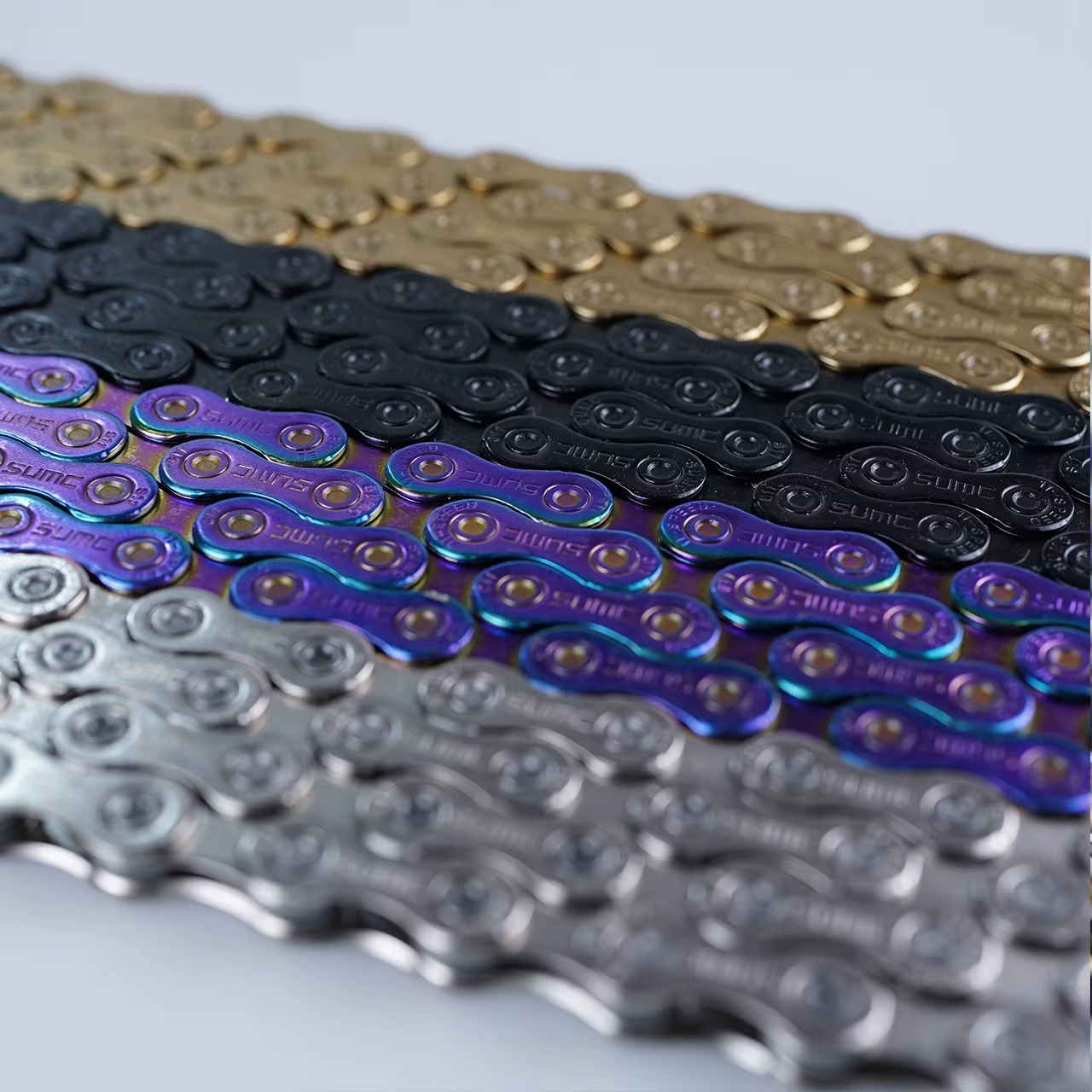
For the chain, I went with IZUMI — specifically the MASH SF collaboration version. IZUMI is a well-regarded Japanese track chain manufacturer with a history of supplying professional track racing and the fixed-gear culture that developed alongside it. The MASH SF collaboration brings the brand association of one of San Francisco’s most respected fixed-gear crews to a chain that was already technically strong. At $19, this is the chain you choose when you want something that performs at a professional level without paying for it.
The feel is smooth and consistent — the quality of the individual links and the pin pressing is noticeably tighter than budget track chains, which translates directly into quieter running and more precise engagement with the sprocket and chainring. For a fixed-gear build where chain tension and engagement quality affect the entire riding character, the chain is not the place to cut costs. At $19, the IZUMI x MASH SF is the obvious choice.
Key Specifications
- Brand: IZUMI — Japanese track chain manufacturer with professional racing history
- Collaboration: MASH SF — San Francisco fixed-gear culture’s most respected crew
- Application: Fixed-gear and single-speed track chain — not for geared drivetrains
- Feel: Smooth and consistent — tighter link and pin quality than budget track chains
Best Use Cases
- Fixed-gear builds where chain quality affects the riding character of the entire drivetrain
- Track and velodrome riding where chain precision and durability under sustained load matter
- Riders who want the MASH SF aesthetic with genuine IZUMI performance quality
Accessories and Lighting
Stem-Mount Cycling Computer Bracket
A good build isn’t just about the rolling components. I picked up a handlebar mount for my front light and cycling computer — nearly weightless, but solid and well-designed. For a clean build aesthetic where every gram and every cable matters, the accessory choices are as deliberate as the component choices. A mount that puts the cycling computer and front light in the right position without adding visual clutter is exactly what this bracket provides: both devices share the stem mount, keeping the cockpit organized without the proliferation of separate clamps on the bars or stem.
At $6, this is the kind of accessory that seems trivial in a build budget that includes a $665 frame — but the right mount makes the cycling computer readable without a head-drop and positions the light where it illuminates the road rather than the wheel. The stem mount position is aerodynamically favorable compared to handlebar clamps that add frontal area. Carbon stem compatibility means no clamp marks or compression damage.
Key Specifications
- Mount type: Stem — cleaner cockpit position than handlebar clamp alternatives
- Capacity: Dual — cycling computer and front light on the same bracket
- Weight: Near-zero contribution to build weight
- Material compatibility: Carbon stem safe — no compression damage or clamp marks
Best Use Cases
- Clean cockpit builds where handlebar clutter reduces the aesthetic of a custom build
- Commuting and training setups requiring both computer and light without separate mounts
- Carbon stem builds where over-tightened bar clamps create compression risks
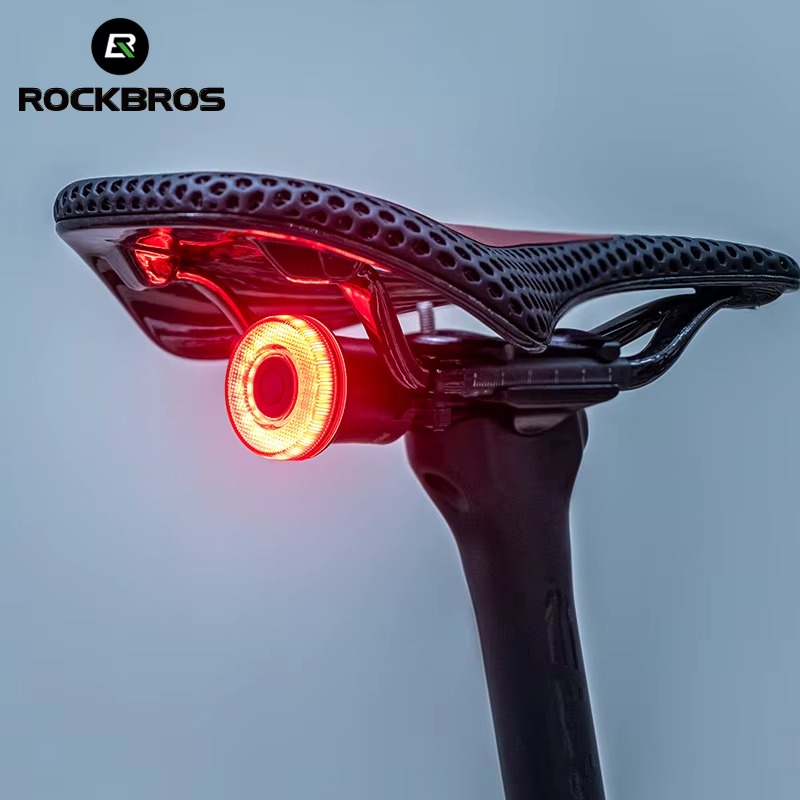
USB-C Rechargeable Rear Bike Light
For the rear, I added a USB-C rechargeable taillight with a tool-free quick-release mount — perfect for commuting or training rides where removing the light before locking up the bike is a security habit. USB-C charging means a single cable standard handles the light alongside phones, computers, and other modern devices. The quick-release mount means the light is off the bike and in a pocket in under three seconds — which makes it a realistic daily habit rather than a task that gets skipped.
The light has a feature I genuinely didn’t expect at $5: you can upload custom images — even animations — through a companion app, which also monitors the unit’s battery status so you’re never caught without a charged light mid-ride. The custom display capability is more than a novelty — riders use it for team logos, jersey designs, or simple animated patterns that increase visibility beyond the standard blinking modes that every other taillight uses.
Key Specifications
- Charging: USB-C — universal cable standard, compatible with modern device ecosystem
- Mount: Tool-free quick-release — light removed in under 3 seconds for security on locked bikes
- Custom display: Upload images and animations via companion app
- App function: Battery status monitoring — charge status visible before departure
Best Use Cases
- Daily commuting where quick-release removal at the destination is a standard security practice
- Training rides where app battery monitoring prevents arriving at a dark road with a dead taillight
- Riders who want increased visibility through custom display patterns beyond standard blinking modes
Carbon Stem Spacer Set

I grabbed a carbon spacer stack for the stem, which let me fine-tune my riding position without buying a new fork. Position is everything on a custom build — the stack height between the fork crown and the stem determines the reach and drop that define how the bike fits your body, and a few millimeters in either direction makes the difference between a position that is sustainable for four hours and one that causes lower back pain after ninety minutes. Carbon spacers add stack height at near-zero weight penalty compared to aluminum alternatives.
At $1.88, a carbon spacer set is the single best value accessory in this entire build. Every custom build should include a full set — they enable progressive position refinement over the first season as the rider’s flexibility and fitness develop, and they are the correct tool for making incremental adjustments without committing to an irreversible fork cut. Cut the fork steerer only after the position is confirmed through riding.
Key Specifications
- Material: Carbon — lighter than aluminum spacers with identical function
- Function: Stack height adjustment between fork crown and stem
- Purpose: Position fine-tuning without fork cut or stem replacement
- Build rule: Cut fork steerer only after position confirmed through riding — spacers enable this
Best Use Cases
- New builds where riding position needs confirmation before the fork steerer is cut
- Riders adjusting position across a season as flexibility and fitness change
- Any carbon fork build where aluminum spacer weight is unnecessary given the $1.88 carbon alternative
Cycling Kit and Shoes
Full-Zip Cycling Jersey

No build is complete without the right kit. I picked up a full-zip jersey with a bold graphic print that I’d been eyeing for a while. A full-zip jersey is more practical than a half-zip for temperature management on longer rides — the full zipper allows instant ventilation adjustment during climbs and descents without removing gloves or stopping. The graphic print on AliExpress cycling jerseys has improved significantly — the dye sublimation quality is now competitive with what premium kit brands produce at three to four times the price.
At $22.53, this is the category where AliExpress value is most dramatic compared to branded alternatives. A comparable quality full-zip jersey from a recognized cycling brand runs $80–150. The fit follows standard cycling jersey cuts — form-fitting through the torso with a longer rear hem that stays tucked while in the riding position. Three rear pockets provide the standard storage for food, tools, and a phone.
Key Specifications
- Closure: Full-zip — instant ventilation adjustment without removing gloves or stopping
- Print: Dye sublimation graphic — competitive quality with premium kit brands at fraction of the price
- Fit: Standard cycling cut — form-fitting torso, long rear hem stays tucked in riding position
- Storage: Three rear pockets — food, tools, phone standard configuration
Best Use Cases
- Road and training rides where temperature variation across a route requires ventilation adjustment
- Custom build completions where kit aesthetics should match the care taken with the components
- Riders building a kit wardrobe at AliExpress prices to enable frequent kit changes without premium cost
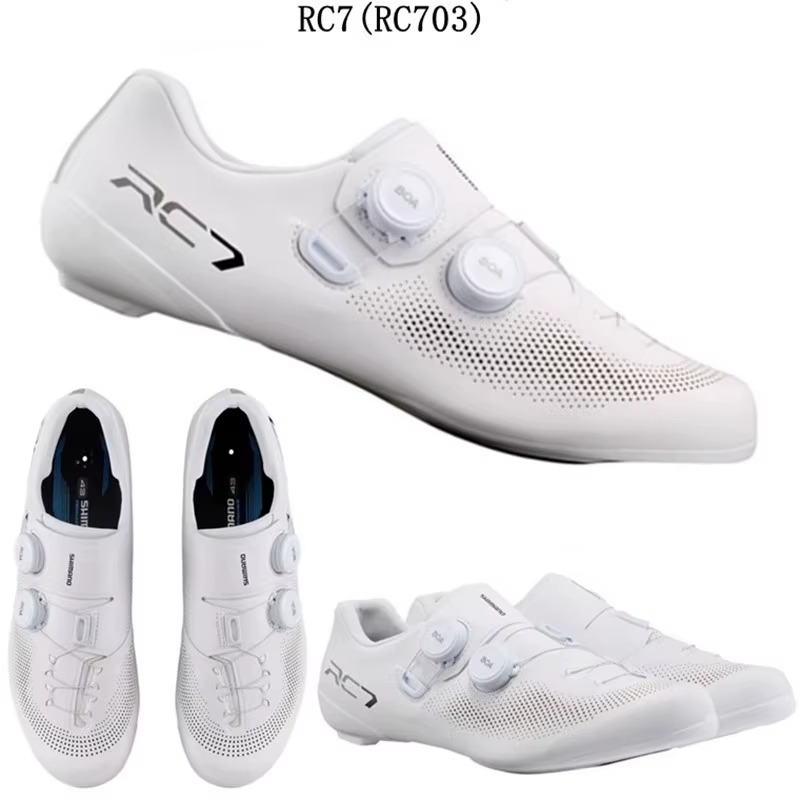
Shimano Road Cycling Shoes — Best Kit
A pair of Shimano road shoes compatible with clipless cleats — the contact point between the rider’s foot and the pedal that determines how efficiently power is transferred from each pedal stroke into forward motion. Shimano road shoes are the entry point of a brand whose shoe quality is well established across every tier of competitive cycling. The shoes are light and stiff — the stiff sole is the specification that matters most for power transfer, as a flexible sole absorbs energy that should be going into the pedal stroke. At $210, these deliver genuine Shimano road shoe performance through AliExpress.
Important sizing note: these shoes run small. I would recommend going up a full size, possibly a size and a half, when ordering. This is the single most important purchasing detail for this product — the correct size is the difference between shoes that perform correctly and shoes that cause foot pain after thirty minutes and eventually go unused. Measure your foot length in centimeters and compare it against the Shimano size chart rather than ordering based on your standard street shoe size.
Key Specifications
- Brand: Shimano — established road cycling shoe quality across competitive tiers
- Cleat type: Clipless compatible — standard road cleat bolt pattern
- Sole: Stiff — power transfer without energy absorption that flexible soles cause
- Sizing warning: Run small — size up 1 to 1.5 sizes; measure foot in centimeters and compare to Shimano chart
Best Use Cases
- Road builds requiring clipless pedal compatibility and genuine stiff-sole power transfer performance
- Riders moving from flat pedals to clipless who want Shimano’s established quality as a first clipless shoe
- Training and competition where shoe stiffness directly affects efficiency and sustained power output
Custom Bicycle Build Guide 2026
Building a custom bicycle from individual components is a fundamentally different experience from buying a complete bike. The result is a machine built exactly to your geometry and specification — but the process requires decisions across a sequence of interdependent components where the wrong choice at one stage affects everything that follows.
Start With the Frame — Everything Else Follows From It
The frame determines your riding geometry, which sets the position your body will hold for every mile you ride. Before ordering a frame, measure your inseam, torso length, and arm reach and compare them against the frame manufacturer’s geometry chart for each size. A frame that is one size too large or too small cannot be corrected through component choices alone — the stem, seatpost, and bar height adjustments available have limits. The BXT frame required sizing up to 54cm for a 6’1″ rider; riders at different heights should confirm their specific size before ordering rather than using general size charts without verification. For AliExpress frames where returns are more complicated than domestic retail, measuring correctly before ordering is the most important purchasing discipline in the entire build.
Sourcing Across Multiple Deliveries — Managing the Build Timeline
A custom build sourced from AliExpress involves multiple separate orders with different delivery timelines — the frame may arrive in three weeks while the crankset arrives in two and the chain arrives in one. Plan the build in parallel with delivery tracking rather than waiting for all components to arrive before beginning assembly. Components that do not require other parts for assembly — cleaning, inspecting, and prepping the frame; lacing wheels if doing a custom rear build; checking spoke tension on pre-built wheels — can be completed as each delivery arrives. The alternative is a compressed final assembly rush when multiple components arrive simultaneously and the build environment is disorganized. An ordered sequential assembly process produces cleaner results and makes problems easier to diagnose when they occur.
What AliExpress Delivers — and Where to Have Realistic Expectations
AliExpress component quality in 2026 is genuine. The BXT frame, SUPERTEAM wheels, and IZUMI chain in this build all perform at levels consistent with their price positioning — which is significantly above what comparable budgets would access through Western retail. The realistic expectations to hold are around finish quality variance (occasional surface blemishes that don’t affect function), out-of-box setup (budget wheels benefit from truing; cranks should be checked for proper torque; chains need lubrication before first use), and sizing specificity for kit items like the Shimano shoes where the run-small characteristic requires deliberate adjustment. None of these are reasons to avoid AliExpress components — they are the informed purchase conditions that make the difference between a successful build and a frustrating one.
After a Full Season — What I’d Change and What I Wouldn’t
After a full season and the start of another, this bike has been everything I hoped for — responsive, reliable, and built exactly to my spec. The handling is sharp and the ride quality punches well above what the parts list suggests. AliExpress genuinely delivers when you do your homework: the component quality is there, and the pricing is hard to beat anywhere on the primary market.
If I were building again: I’d order the Shimano shoes a size and a half larger immediately rather than discovering it through the sizing chart the hard way. I’d include the carbon spacer set from the start rather than adding it after initial setup — starting with full stack height and removing spacers as the position is refined is the correct approach. And I’d order the 38mm wheelset alongside this build rather than saving it for the next project.
If you’ve been thinking about a custom build, stop waiting and start speccing. The parts are out there — and the ride is worth it.