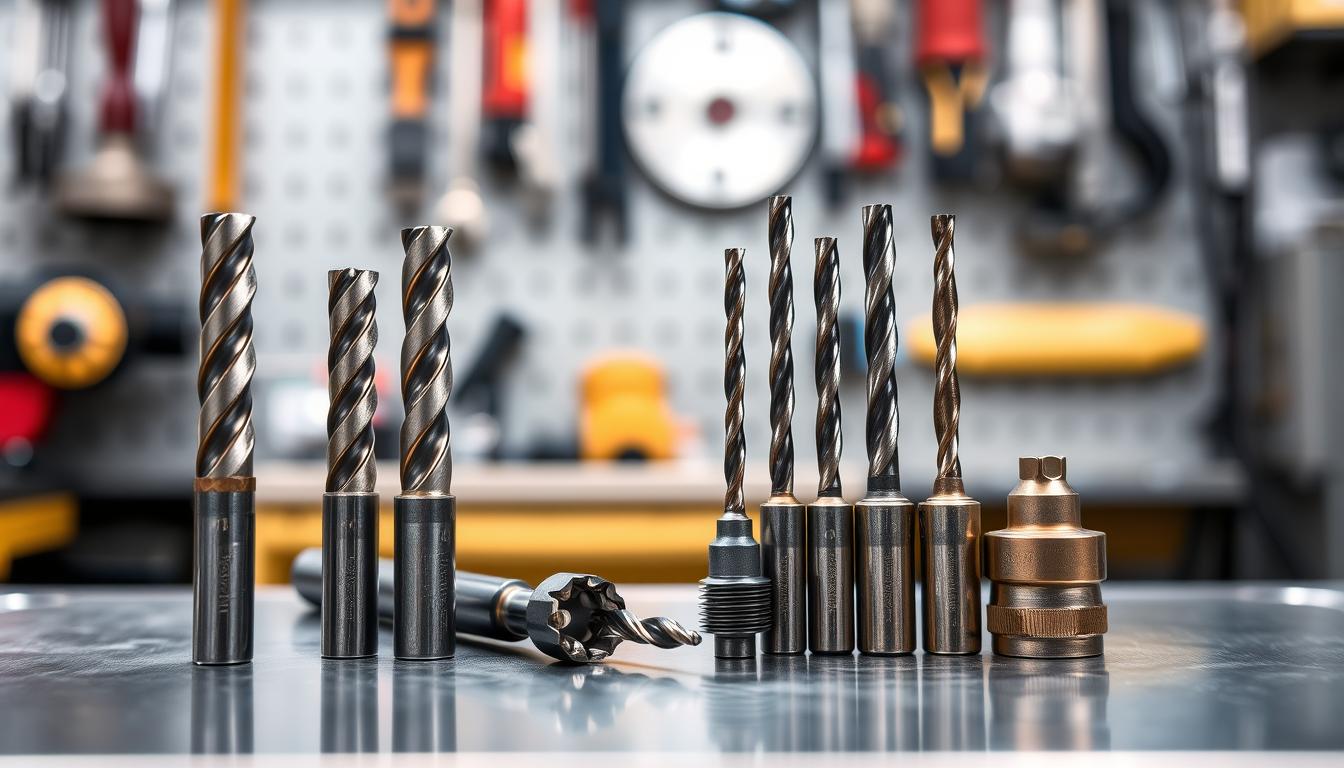

Thread quality and cut surface finish are the visible measures of machining precision — and both depend entirely on the cutting tool geometry, material, and coating matched to the specific workpiece. A standard HSS tap in hardened stainless steel breaks before completing the first thread. A generic abrasive disc on soft aluminum loads the abrasive and produces a torn edge rather than a clean cut. A thread milling cutter run without the appropriate chip evacuation geometry clogs and ruins the bore. Every cutting and threading operation has a correct tool specification, and using the wrong tool does not just produce poor results — it often destroys the workpiece and the tool simultaneously.
AliExpress in 2026 carries strong options from specialist tooling brands including GULING and OKET alongside quality generic alternatives that provide professional-grade cutting and threading capability at workshop-accessible prices. After testing these tools across rotary cutting operations, CNC thread milling, spiral-flute machine tapping, and surface finishing applications, we identified five products that deliver consistent, reliable performance across their intended materials and operations.
Whether you are equipping a CNC machining bench, a manual threading station, a rotary tool workshop, or a finishing setup, this guide covers the cutting and threading tool that matches your specific machining requirements.

Quick Comparison: Top 5 Cutting Tools & Thread Taps
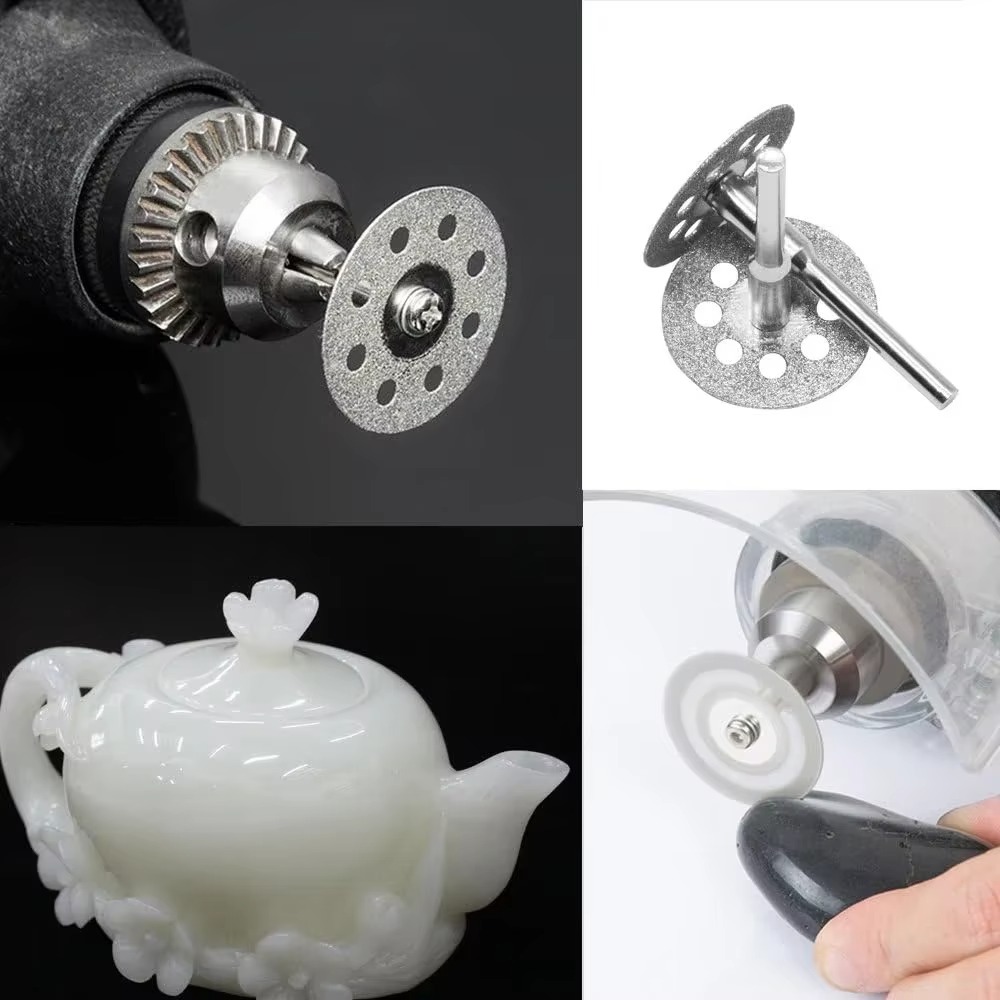
22mm Diamond Cutting Disc Set 12pcs

GULING Single-Tooth Carbide Thread Milling Cutter

DLC Coated Thread Milling Cutters M1–M16

OKET HSS-Co Spiral Flute Machine Tap M2–M12

Rubber Abrasive Grinding Head 2.35/3mm Shank
Detailed Specifications Comparison
| Specification | Diamond Disc Set | GULING Thread Mill | DLC Thread Mill | OKET Machine Tap | Rubber Grinding Head |
|---|---|---|---|---|---|
| Tool Type | Cutting disc — rotary | Thread milling cutter — CNC | Thread milling cutter — CNC | Machine tap — spiral flute | Abrasive grinding head — rotary |
| Material / Coating | Diamond abrasive coating | Solid carbide — single tooth | Tungsten carbide HRC65 + DLC coating | HSS-Co + OX surface treatment | Rubber bonded abrasive |
| Size / Range | 22mm diameter, 3mm shank, 12-piece | M1 – M14 | M1 – M16 | M2 – M12 | 2.35mm and 3mm shank |
| Flute / Design | Abrasive edge — annular disc | Single-tooth — helical interpolation | 3-flute — chip evacuation optimized | Spiral flute — upward chip evacuation | Rubber conforming — flexible contact |
| Machine Requirement | Rotary tool / Dremel | CNC machining center | CNC machining center | Machine tap head / CNC | Rotary tool / Dremel |
| Primary Material | Metal, stone, ceramics (light duty) | Steel, stainless, aluminum (all metals) | Aluminum, non-ferrous alloys | Steel, stainless, aluminum M2–M12 | Soft metals, plastics (finishing only) |
| Rating | 4.7/5 | 4.8/5 | 4.8/5 | 4.7/5 | 4.6/5 |
Detailed Reviews: Top 5 Cutting Tools & Thread Taps
22mm Diamond Cutting Disc Set 12pcs — Editor’s Choice
The 22mm Diamond Cutting Disc Set earns our Editor’s Choice as the most accessible and immediately useful precision cutting tool in this comparison — and at $3.55 for 12 pieces, it represents the strongest value-to-capability ratio of any item in this guide. The 22mm diameter is the critical specification that makes these discs suited to detail and precision work that larger cutting wheels cannot perform: accessing narrow grooves, cutting through small metal fittings, trimming PCB traces, separating bonded components, and performing careful material removal in spaces where a standard cut-off wheel would damage surrounding areas.
The diamond abrasive coating provides cutting capability across the range of hard materials that rotary tool users encounter most — metal, stone, ceramics, glass, and hard plastics — in a way that standard abrasive wheels cannot approach consistently. Diamond abrasive maintains its cutting action as the disc wears rather than loading and glazing the way aluminum oxide wheels do on hard materials. The consistent cutting performance across a 12-piece set means that when one disc becomes worn, a fresh disc with identical performance characteristics is immediately available without waiting for a new order.
The 3mm shank arbor mandrel compatibility covers the vast majority of standard rotary tools and Dremel-style machines in use in hobbyist and professional workshops worldwide. The limitation to light-duty applications — these discs are not for cutting thick metal stock or heavy material removal — is the honest constraint of a 22mm diameter tool that should be understood before purchase. Within their designed application of precise detail cutting in small areas, these discs perform reliably and the 12-piece quantity provides enough stock to complete significant projects without concern about depletion.
“Precision is not just about the tool you use, but how well that tool integrates with your vision for the final piece.”
Key Specifications
- Disc Diameter: 22mm — compact size for detail and precision cutting in confined areas
- Shank: 3mm arbor mandrel — compatible with standard rotary tools and Dremel-style machines
- Cutting Material: Diamond abrasive — maintains cutting action without loading or glazing
- Quantity: 12 pieces — sufficient stock for extended projects without mid-project depletion
- Target Materials: Metal, stone, ceramics, glass, and hard plastics in light-duty applications
- Limitation: Light-duty — not for thick metal stock or heavy material removal tasks
Best Use Cases
- Detail cutting and slotting in metal fittings and small hardware where larger discs cannot access
- Grooves and separation cuts in stone, tile, and ceramic crafts work
- PCB trace cutting and board modification work requiring precise small material removal
- Hobby and scale model work where 22mm diameter enables fine detail impossible with larger discs
- Jewelry making and small metalwork requiring controlled cuts in confined areas
- General rotary tool cutting applications where a stock of 12 identical discs supports extended project work
GULING Single-Tooth Carbide Thread Milling Cutter — Best for CNC
The GULING Single-Tooth Carbide Thread Milling Cutter earns the Best for CNC position as the most technically capable threading tool in this comparison. Thread milling is fundamentally different from tapping — a tap is a form tool that cuts the thread profile in a single axial pass and is vulnerable to catastrophic breakage in blind holes if it reaches the bottom or encounters hard material. A thread milling cutter performs a helical interpolation path around the bore using the CNC machine’s simultaneous three-axis motion, cutting the thread profile progressively without the axial force that causes tap breakage. The significant advantage is that a broken thread mill can be backed out of the bore without destroying the part — a broken tap typically requires EDM or chemical removal and often destroys the workpiece.
GULING’s single-tooth design provides exceptional control over the thread cutting process. With a single cutting tooth, the cutter engages only one thread pitch at a time during the helical interpolation, which minimizes cutting force and allows the programmer to monitor and control the thread quality through the cut parameters rather than committing to the full thread form in one pass. This makes the GULING cutter particularly valuable for difficult materials and tight tolerance threads where conventional tapping is risky and multi-tooth thread mills can chatter or deflect.
The M1 to M14 range covers the complete spectrum from the smallest precision electronics threads through the general machining and heavy-duty sizes encountered across the metal fabrication industry. The solid carbide construction provides the rigidity and hardness that thread milling at small diameters requires — a carbide tool deflects less under cutting force than HSS, which is the critical variable for thread accuracy in small-diameter bores where even minor deflection moves the thread profile outside tolerance. The CNC programming requirement is the honest limitation — this is a specialist CNC tooling item, not a tap replacement for manual threading operations.
Key Specifications
- Design: Single-tooth — one cutting engagement per helical interpolation pass for maximum control
- Material: Solid carbide — rigidity and hardness for accurate threading at small diameters
- Thread Range: M1 – M14 — precision electronics through heavy-duty fabrication sizes
- Machine Required: CNC machining center with helical interpolation capability (3-axis simultaneous)
- Safety Advantage: Breakage can be recovered from; broken taps in blind holes typically destroy the part
- Limitation: CNC-only — requires specific programming; not a manual threading tool
Best Use Cases
- High-value precision part threading where tap breakage risk would destroy expensive workpieces
- Small thread sizes (M1–M4) in electronics housings and instrument bodies where tap breakage is catastrophic
- Stainless steel and hardened alloy threading where conventional taps experience excessive breakage
- Blind hole threading where tap bottom-out breakage is a constant risk with conventional tooling
- CNC production environments where consistent thread quality across high volumes is a commercial requirement
- Machinists transitioning from manual tapping to CNC thread milling for quality and safety improvement
DLC Coated Thread Milling Cutters M1–M16 — Best for Aluminum
The DLC Coated Thread Milling Cutters earn the Best for Aluminum position as the most specialized and highest-performing threading tool for non-ferrous materials. Aluminum and its alloys present a threading challenge that is distinct from hard metals — the material is soft enough that carbide hardness is not the primary requirement, but its tendency to adhere to cutting surfaces under friction creates built-up edge on uncoated tools that contaminates the thread form and eventually causes tool failure through chip packing rather than wear. The DLC (Diamond-Like Carbon) coating addresses this directly: its extremely low coefficient of friction prevents aluminum from bonding to the cutting edge, keeping the thread profile clean through extended high-volume production runs.
The HRC65 3-flute tungsten carbide substrate provides the structural foundation that the DLC coating performs on. Three flutes optimize chip evacuation for the sticky chip characteristics of aluminum — more chip space than a two-flute design, providing the clearance that aluminum’s tendency to form continuous chips requires to prevent clogging and the associated heat buildup that damages the DLC coating chemistry. The combination of HRC65 hardness and DLC surface properties produces dimensional accuracy across long runs that maintains thread tolerance where uncoated tools would drift as built-up edge progressively changes the effective cutting geometry.
The M1 to M16 range is the broadest thread size coverage in this comparison, extending two sizes beyond the GULING to accommodate larger M15 and M16 threaded fastener applications in aluminum structural and manufacturing contexts. The specialist aluminum and non-ferrous alloy application is both the strength and the limitation of this tool — using DLC-coated cutters on hardened steel risks coating delamination from the heat generated at higher hardness cutting, which is why the correct material matching is the prerequisite for realizing the performance advantage these tools provide.
Key Specifications
- Coating: DLC (Diamond-Like Carbon) — ultra-low friction prevents aluminum adhesion to cutting edge
- Substrate: Tungsten carbide HRC65 — structural hardness supporting DLC coating performance
- Flutes: 3-flute — optimized chip evacuation for aluminum’s continuous chip characteristics
- Thread Range: M1 – M16 — broadest coverage in this comparison, including M15 and M16
- Primary Materials: Aluminum, non-ferrous alloys, brass, copper
- Limitation: DLC coating vulnerable to delamination on hardened steel — use GULING for ferrous materials
Best Use Cases
- High-volume aluminum threading production where DLC anti-adhesion maintains consistent thread quality across many parts
- Aerospace and automotive aluminum component threading requiring tight dimensional tolerance across production runs
- Brass and copper threading where DLC’s low friction advantage applies to other non-ferrous adhesion-prone materials
- CNC machining centers processing aluminum alloys where built-up edge on uncoated tools is a known problem
- Production environments where superior thread surface finish is a quality requirement for mating hardware
- Complement to GULING cutters in workshops that process both aluminum and ferrous metals
OKET HSS-Co Spiral Flute Machine Tap M2–M12 — Best Machine Tap
The OKET HSS-Co Spiral Flute Machine Tap earns the Best Machine Tap position as the highest-quality conventional tapping tool in this comparison — the correct choice for machine tapping operations where CNC thread milling is not available or not appropriate. The spiral flute design is the key specification that differentiates this tap from straight-flute alternatives: the helical flute geometry actively pulls chips upward out of the hole during cutting rather than packing them in front of the tap, which is the primary mechanism of tap breakage in blind holes. Every chip that a straight-flute tap packs into the bottom of a blind hole increases the torsional load on the tap until it exceeds the tool’s shear strength and breaks.
The HSS-Co cobalt alloy composition provides the hot hardness advantage over standard HSS that allows this tap to handle stainless steel, hardened mild steel, and high-strength alloys that would destroy a standard HSS tap through edge softening under cutting heat. OKET’s OX (oxide) surface treatment adds a layer of protection against adhesion — the black oxide surface has lower affinity for metal adhesion than bare HSS, reducing the tendency for tapped material to weld onto the cutting edges that causes tap seizure in difficult materials. The JIS standard compliance ensures that thread dimensions meet the dimensional tolerances required for commercial fastener compatibility across the M2–M12 range.
The distinctive red ring marking on the tap shank provides immediate visual identification in a tap rack or drawer — a seemingly minor feature that has real value in production environments where a mixed collection of tap sizes and types needs to be selected quickly and correctly under time pressure. The speed management requirement at smaller sizes — M2 and M3 taps are vulnerable to breakage at excessive RPM — is standard practice for all small-diameter taps and reflects the physics of small cross-section tools under torsional load rather than a specific limitation of the OKET design.
Key Specifications
- Flute Type: Spiral — active upward chip evacuation from blind holes prevents chip packing breakage
- Material: HSS-Co cobalt alloy — hot hardness retention for stainless and hard alloy tapping
- Surface Treatment: OX (black oxide) — reduces adhesion tendency in difficult tapping materials
- Standard: JIS — thread dimensional accuracy for commercial fastener compatibility
- Thread Range: M2 – M12 — covers precision electronics through general fabrication sizes
- Identification: Red ring on shank — visual tap type identification in rack or drawer storage
Best Use Cases
- Machine tapping in blind holes where spiral flute chip evacuation eliminates the primary tap breakage mechanism
- Stainless steel and hardened alloy tapping where HSS-Co hot hardness maintains cutting edge integrity
- General fabrication machine tapping across steel, aluminum, and brass from M2 through M12
- Production tapping environments where tap identification speed and OX treatment longevity matter
- Electronics and instrument manufacturing requiring M2–M6 threading in steel and aluminum bodies
- Shops upgrading from standard HSS taps that experience excessive breakage on harder materials
Rubber Abrasive Grinding Head 2.35/3mm Shank — Finishing Tool
The Rubber Abrasive Grinding Head earns its position as the essential finishing tool that completes every cutting and threading operation in the workflow — removing the burrs that cutting discs leave at cut edges, polishing the surfaces that thread tapping roughens around the hole entrance, and providing the controlled surface refinement that separates professional-quality finished parts from visible tool marks and sharp edges. No cutting or threading operation produces a part ready for final use without a finishing step, and the rubber abrasive head performs this step more effectively than rigid abrasive alternatives because its conforming flexibility contacts complex surface geometry uniformly.
The rubber bonded abrasive construction is the design feature that makes this tool uniquely suited to finishing work. Unlike a rigid grinding stone that contacts only the highest points of a surface, the rubber matrix compresses under contact pressure to conform to the actual surface profile — ensuring uniform abrasive contact across curved edges, chamfers, radiused corners, and the irregular surfaces around threaded holes. This conforming contact produces even finish without the gouging or flat-spotting that rigid abrasives create on curved and complex geometry. On soft metals and plastics, the rubber’s compliance prevents the digging and corner rounding that harder abrasives cause.
The availability in both 2.35mm and 3mm shank formats covers the two standard rotary tool collet sizes used globally — 2.35mm for pen-style precision rotary tools and dental equipment-format tools, 3mm for standard Dremel-compatible and similar rotary tool ranges. At $0.86 per head, stocking multiples in a workshop is trivial — a fact that supports the good practice of having fresh abrasive heads available throughout a finishing session rather than working with a loaded or worn head that has lost effective grit. This is the consumable that completes the machining workflow at essentially zero cost per part.
Key Specifications
- Construction: Rubber bonded abrasive — conforming flexibility for uniform surface contact
- Shank Options: 2.35mm and 3mm — covers standard precision rotary tools and Dremel-compatible ranges
- Application: Finishing only — deburring, polishing, and surface smoothing after cutting operations
- Material Compatibility: Soft metals, aluminum, brass, and plastics — not for hard steel or heavy removal
- Price: $0.86 per head — trivial cost supports fresh head replacement throughout each finishing session
- Limitation: Finishing tool only — not for material removal, cutting, or aggressive grinding
Best Use Cases
- Deburring and edge smoothing after diamond disc cutting operations on metal and plastic
- Thread hole entrance polishing after machine tapping to remove raised material around the hole
- Surface finishing on aluminum and brass machined parts to achieve a polished appearance
- Curved and complex geometry finishing where rigid abrasives would create uneven contact
- Light deburring of plastic and soft metal edges in electronics enclosures and housings
- Final finishing step for any part where visible tool marks or sharp edges are unacceptable
Cutting Tools & Thread Taps Buying Guide 2026
Selecting cutting and threading tools correctly requires matching tool material, geometry, and coating to the specific workpiece material and machine type. The three variables interact — a carbide tool on the wrong machine creates chatter that destroys the tool; the right tool on the wrong material deforms rather than cuts; the right material without appropriate coating builds up edge and degrades before its structural life is exhausted.
Thread Milling vs Conventional Tapping — When to Choose Each
Conventional tapping with spiral-flute machine taps like the OKET is the correct approach for through holes in moderate hardness materials where a CNC machining center is not available, or where the workpiece geometry and fixturing make single-axis tapping operations straightforward. It is faster per hole than thread milling for production volumes where breakage risk is manageable and parts are lower value. Thread milling with the GULING or DLC cutters is the correct approach when any of these conditions apply: the material is hard or difficult (stainless, titanium, hardened steel); the holes are blind (the bottom of the hole is a tap breakage risk); the parts are high-value and a broken tap would be catastrophically expensive; or the thread tolerance requirement is tighter than conventional tapping can achieve consistently. Thread milling requires a CNC machine with 3-axis simultaneous motion capability — this is not optional, it is a functional requirement of the helical interpolation that thread milling performs.
Tool Coating Selection — DLC vs Uncoated Carbide
Coatings serve specific functions that are material-dependent — applying the wrong coating for the material type produces no benefit and can be actively harmful. DLC (Diamond-Like Carbon) coating is specifically optimized for non-ferrous materials — aluminum, brass, copper, and their alloys — where its extremely low friction coefficient prevents the material adhesion that causes built-up edge on uncoated tools. On these materials, DLC-coated tools outlast uncoated equivalents dramatically and produce superior surface finish. On ferrous materials and hardened steel, the high cutting temperatures involved can decompose the DLC coating chemistry, causing delamination and premature tool failure. Match DLC to non-ferrous, use uncoated or TiAlN-coated carbide for steel and stainless.
Tap and Cutter Maintenance
Clean taps and cutters immediately after use — cutting fluid, metal chips, and workpiece material residue left on the cutting edges accelerates corrosion and, in the case of aluminum on uncoated tools, chemically bonds and is much harder to remove after drying. Apply a light coat of machine oil to carbon steel taps before storage. Store taps individually or in labeled slots rather than loose — contact between tap cutting edges causes micro-damage that shortens life. Inspect cutting edges before use and retire any tap showing rounded corners, chipped flutes, or discoloration from overheating — a damaged tap is more likely to break in the workpiece than to complete the thread, and the cost of the tap is trivial compared to the cost of extracting a broken tap from a precision part.
Our Final Recommendations
For the majority of machining workshops, the most impactful starting purchases from this guide are the OKET HSS-Co Spiral Flute Tap for conventional machine tapping — the spiral flute design’s blind-hole safety advantage over straight-flute taps is immediate and significant — and the 22mm Diamond Disc Set for rotary tool precision cutting at a price that makes it a no-decision purchase. These two tools address the most common cutting and threading operations at the lowest total investment.
For CNC machining centers, the GULING Single-Tooth Thread Mill is the correct investment for general material threading where breakage risk justifies the switch from tapping, and the DLC Coated Thread Mill is the specialist upgrade for aluminum-intensive production where built-up edge on uncoated tools is a known problem. The Rubber Abrasive Grinding Head at $0.86 completes every cutting and threading operation in this workflow — stock a drawer with multiples and use a fresh head for every finishing session. Together, these five tools cover the complete cutting and threading workflow from initial material separation through professional surface finish.