

The consumables side of soldering — flux paste, solder wire, and desoldering braid — are the components that make or break joint quality at the point of contact. A professional-grade iron with a worn-out tip and oxidized generic solder wire will produce inferior joints compared to a modest station running fresh high-quality materials. Flux chemistry determines wettability and residue behavior; solder alloy composition determines joint strength, conductivity, and appearance; braid quality determines how cleanly excess solder and mistakes can be corrected without pad damage. Getting these materials right is as important as getting the tool right.
AliExpress in 2026 carries a strong selection of professional soldering consumables from established brands including MECHANIC and ESPLB alongside quality generic alternatives at prices that make stocking a well-supplied bench straightforward. After testing these materials across smartphone board repair, SMD rework, through-hole kit assembly, and desoldering applications, we identified five products that deliver consistent, reliable performance matched to their specific application in the repair workflow.
Whether you are setting up a professional phone repair bench, building a hobby electronics workshop, or filling gaps in an existing supply, this guide covers the flux paste, solder wire, and desoldering braid that complete a capable soldering consumables kit.

Quick Comparison: Top 5 Soldering Materials & Flux

MECHANIC M35 Lead-Free Soldering Flux Paste

ESPLB CF-10 Rosin Core Solder Wire

Copper Desoldering Braid Wick
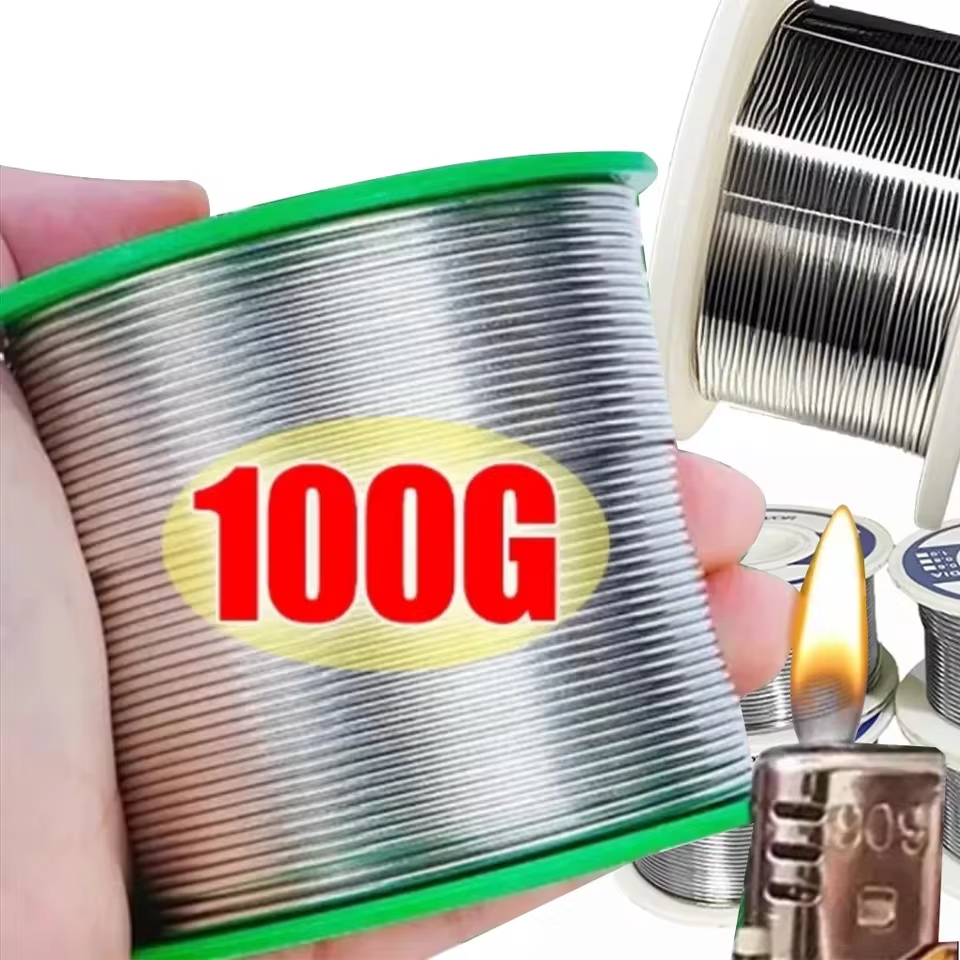
Rosin Core Solder Wire — 2.0% Flux

Desoldering Braid — Precision Electronics
Detailed Specifications Comparison
| Specification | MECHANIC M35 Flux | ESPLB CF-10 Wire | Copper Braid Wick | Rosin Wire 2.0% Flux | Precision Braid |
|---|---|---|---|---|---|
| Product Type | Flux paste — syringe | Solder wire — reel | Desoldering braid | Solder wire — roll | Desoldering braid |
| Lead-Free | Yes | Yes — pure tin | Yes — RoHS compliant | Yes — tin alloy | Yes |
| Flux Type / Content | No-clean flux paste | Rosin core — built-in | N/A — braid only | Rosin core — 2.0% flux | N/A — braid only |
| Size / Diameter Options | Syringe — 10g / 50g | 0.5mm – 2.0mm / 50g-100g | 6M – 20M lengths | 0.8mm, 1.0mm / 20g-100g | 2.0mm and 3.5mm widths / 1.5M |
| Residue | Minimal — no-clean | Standard rosin residue | N/A | Minimal — no-clean formula | N/A |
| Best For | Phone board, SMD rework | General and professional | PCB and BGA repair | Fast workflow, board cleanliness | Fine-pitch SMD and through-hole |
| Rating | 4.8/5 | 4.8/5 | 4.7/5 | 4.7/5 | 4.6/5 |
Detailed Reviews: Top 5 Soldering Materials & Flux
MECHANIC M35 Lead-Free Soldering Flux Paste — Editor’s Choice
The MECHANIC M35 Lead-Free Soldering Flux Paste earns our Editor’s Choice as the most important single consumable upgrade available to electronics repair technicians who are not already using a professional flux paste formulation. Flux is what makes solder flow — it chemically cleans the metal surfaces, removes the oxide layer that prevents solder adhesion, and reduces surface tension so solder wets and spreads onto the pad and component lead rather than beading. The difference between a quality flux paste and a generic alternative is visible in every joint, and MECHANIC is one of the most widely trusted flux brands in the professional phone repair community for exactly this reason.
The syringe delivery format is the practical design decision that makes this product appropriate for precision board work. A syringe allows controlled deposition of a small, precise amount of flux exactly where it is needed — on the pad, on the component lead, or at the point of a bridge that needs correction. The alternative — flux pens, jars, and bottles — either deliver imprecise quantities or require a tool for application that adds steps to an already detailed workflow. For smartphone logic board repairs where adjacent pads are separated by fractions of a millimeter, syringe precision is not a luxury but a practical requirement.
The no-clean formula is the second specification that matters most for professional use. No-clean flux leaves minimal residue that does not require post-solder cleaning to prevent corrosion or electrical leakage — the residue is chemically inert once the flux has completed its function during soldering. For phone board repair where full board washing after every operation is impractical, no-clean chemistry eliminates the cleaning step while still delivering the wettability and flow that professional joints require. Heat stability under the temperatures of fine-pitch SMD work ensures the formula does not char or decompose, which would leave conductive residue rather than the inert remnant of a correctly activated no-clean flux.
Key Specifications
- Format: Syringe — controlled precision application at exactly the required location
- Formula: No-clean — minimal inert residue, no post-solder washing required
- Lead Content: Lead-free — RoHS compatible, safe for technician and environment
- Appearance: Clear paste — solder flow visible through the flux during application
- Heat Stability: Stable under fine-pitch SMD soldering temperatures — does not char
- Best Application: Smartphone logic board repair, SMD rework, bridge correction
Best Use Cases
- Smartphone and tablet logic board component replacement and bridge correction
- Fine-pitch SMD rework where syringe precision prevents flux contamination of adjacent areas
- BGA pad preparation before reballing or component placement
- Any soldering operation where no-clean chemistry eliminates post-work board washing
- Improving wettability on aged or oxidized pads where wire solder flux alone is insufficient
- General-purpose flux for any technician transitioning from generic flux to professional formulation
ESPLB CF-10 Rosin Core Solder Wire — Best Solder Wire
The ESPLB CF-10 Rosin Core Solder Wire earns the Best Solder Wire position for its combination of pure tin composition, built-in rosin flux core, and diameter range that covers every standard electronics soldering application from fine-pitch SMD through general through-hole assembly. Pure tin delivers electrical conductivity and mechanical joint strength that alloys with higher lead or antimony content cannot match for modern electronics — and the bright, reflective joint appearance that pure tin produces makes cold joint identification during inspection significantly easier than the duller finish of lower-purity alternatives.
The built-in rosin flux core is the practical advantage that makes this wire a complete solution rather than a component requiring separate flux preparation. Each melt releases the correct quantity of flux at the joint — enough to clean the surfaces and promote wetting without the excess that separate flux application can introduce. For through-hole kit assembly, standard board repair, and general electronics work where the workflow benefit of not pre-applying separate flux outweighs the precision control that syringe flux provides, integrated flux core wire is the faster and more convenient approach.
The availability in 0.5mm through 2.0mm diameters across 50g and 100g reels addresses every common scenario. Fine-pitch SMD work benefits from 0.5mm or 0.6mm wire where the small diameter deposits controlled quantities at precise locations. General electronics and through-hole work runs most efficiently at 0.8mm to 1.0mm. Larger connections — power leads, chassis grounds, and heavy connectors — benefit from the faster solder delivery of 1.5mm or 2.0mm wire. Matching wire diameter to joint size is a simple practice that significantly improves joint quality and reduces the risk of bridging or solder starvation from using an incorrectly sized wire.
Key Specifications
- Alloy: Pure tin — maximum electrical conductivity and mechanical joint strength
- Flux Core: Built-in rosin — correct flux quantity released at each melt automatically
- Diameter Range: 0.5mm – 2.0mm — fine SMD through heavy through-hole applications
- Reel Sizes: 50g and 100g — matches volume to project scale and usage frequency
- Joint Finish: Shiny, professional appearance — simplifies cold joint identification during inspection
- Lead-Free: Yes — RoHS compliant pure tin formulation
Best Use Cases
- General electronics repair across through-hole, SMD, and wire connection applications
- Fine-pitch SMD soldering using 0.5mm or 0.6mm diameter for controlled small-quantity deposition
- Through-hole kit assembly where 0.8mm or 1.0mm diameter covers standard component lead sizes
- Professional repair benches that need a single high-quality wire covering all standard applications
- Inspection-critical work where the shiny pure tin finish makes joint quality assessment faster
- Replacing generic or low-purity solder wire as the primary daily-use bench consumable
Copper Desoldering Braid Wick — Best for PCB & BGA
The Copper Desoldering Braid Wick earns the Best for PCB & BGA position as the most capable solder removal tool for densely populated board work where precision and pad safety are the primary requirements. Desoldering braid works by capillary action — the woven copper structure draws molten solder into the braid away from the pad surface, leaving the pad clean and ready for new component installation. The quality of this capillary action depends entirely on the purity of the copper and the uniformity of the weave, which is why high-quality braid removes solder cleanly in seconds while cheap alternatives require excessive dwell time that risks lifting pads.
Pure copper construction provides the thermal conductivity required to transfer heat from the iron through the braid and into the solder joint simultaneously — melting the solder while the capillary structure absorbs it. Low-purity or improperly alloyed braid conducts heat unevenly, creating hot spots in the braid that oxidize the copper locally and reduce absorption efficiency. The RoHS lead-free compliance ensures that solder absorbed into the braid does not create contamination issues for subsequent braid sections used on different joints — particularly important on high-density boards where multiple passes across nearby pads are common.
The availability in lengths from 6M to 20M on a single reel provides practical value for workshop purchasing — a professional repair shop processing multiple BGA rework operations per day consumes braid at a rate where a 6M length is a supply inconvenience rather than a stock quantity. Braid is non-reusable — each section is consumed in a single application and the used portion cut away, so having adequate length on hand prevents mid-repair supply interruptions. Flux pre-treatment of the braid before application — applying a small amount of flux paste to the braid section that will contact the joint — significantly improves solder absorption speed and reduces necessary dwell time.
Key Specifications
- Material: Pure copper — maximum thermal conductivity and uniform capillary absorption
- Compliance: RoHS lead-free — no contamination risk during multi-pass BGA work
- Weave: Fine uniform weave — consistent solder absorption without hot spots
- Length Options: 6M – 20M — suitable for hobbyist stock through professional workshop supply
- Usage: Non-reusable per section — cut and discard used portion after each application
- Pro Tip: Pre-treat braid with flux paste before application for faster absorption and shorter dwell time
Best Use Cases
- BGA pad cleaning after ball removal in reballing and component replacement operations
- Removing excess solder from PCB pads before new component installation
- Cleaning solder bridges on fine-pitch IC leads where a desoldering pump creates suction risk
- Desoldering through-hole components by wicking solder from both pad faces simultaneously
- Professional repair shops that need 20M stock quantities to support production-volume BGA work
- Any solder removal application where pad safety under minimal dwell time is the priority
Rosin Core Solder Wire — 2.0% Flux
The Rosin Core Solder Wire with 2.0% Flux earns its position as the best no-clean wire option for technicians who prioritize board cleanliness and minimal post-solder residue in their daily workflow. The 2.0% flux content is the key specification — sufficient flux to promote proper wetting and solder flow across standard pad and lead conditions without the excess that higher-flux-content wires deposit and that can require cleaning to prevent long-term electrical leakage on high-impedance circuits. The no-clean formula means flux residue left on the board after soldering is chemically inert — it has completed its function during soldering and presents no corrosion or conductance risk in normal operating conditions.
The 0.8mm and 1.0mm diameter availability reflects an intelligent selection focused on the two sizes that cover the majority of practical electronics repair and assembly work. At 0.8mm, through-hole component leads, standard SMD component pads, and general board repair all receive the right quantity of solder per application — enough to complete the joint without excess that bridges to adjacent pads. At 1.0mm, larger connections benefit from faster solder delivery that reduces the time the iron dwells on the joint. Keeping both diameters at the bench and selecting based on the joint size is the practice that most directly improves joint consistency across varied work.
The 20g, 50g, and 100g roll options provide flexible purchasing based on usage rate — a hobbyist who solders occasionally is better served by a 20g roll that remains fresh rather than a 100g reel that oxidizes at the exposed wire end over months of low-use storage. For professional benches where solder wire consumption is constant, 100g rolls reduce purchase frequency and typically offer better per-gram value. Storing solder wire in a sealed bag or container between sessions prevents the surface oxidation that gradually reduces wettability of exposed wire ends.
Key Specifications
- Flux Content: 2.0% rosin core — sufficient wetting without excess residue
- Formula: No-clean — inert residue after soldering, no board washing required
- Diameters: 0.8mm and 1.0mm — covers standard through-hole and general repair applications
- Roll Sizes: 20g, 50g, 100g — purchase quantity matched to usage frequency
- Alloy: Lead-free tin — RoHS compliant
- Storage Note: Keep sealed between sessions to prevent wire-end oxidation over time
Best Use Cases
- General board repair and through-hole assembly where no-clean residue simplifies post-work inspection
- Production repair work where skipping the board cleaning step improves throughput
- High-impedance circuits where minimizing any residue conductance risk is important
- Occasional hobbyist use where 20g rolls stay fresher than larger quantities between sessions
- Professional benches where board cleanliness after soldering is a client-facing quality standard
- Complement to the ESPLB CF-10 for benches that want both a standard rosin and a no-clean option
Desoldering Braid — Precision Electronics
The Desoldering Braid for Precision Electronics earns the Best Precision Braid position as the most targeted solder removal tool for technicians who work across both fine-pitch SMD and standard through-hole applications and need a width selection matched to both. The availability in 2.0mm and 3.5mm widths in the same 1.5M compact format addresses the fundamental ergonomic limitation of using a single braid width across both application types: a 3.5mm braid on a 0402 pad risks bridging to adjacent pads during removal, while a 2.0mm braid on a large through-hole ground pad is slow and requires multiple passes where a wider braid would complete the operation in one.
The 2.0mm width is the precision instrument of the two — narrow enough to work between fine-pitch IC leads without contacting adjacent pads, effective on 0603 and larger SMD component pads, and precise enough for QFN and similar packages where the pad-to-pad spacing demands controlled braid contact. The 3.5mm width suits the larger thermal mass applications: through-hole component pins on power supply boards, ground planes, large connector pads, and any joint where heat transfer area determines whether the braid can absorb the solder volume in an acceptable dwell time. Having both widths available on the bench eliminates the compromise of using the wrong width for a specific task.
The 1.5M compact format is appropriate for repair benches where the full-length reels of the larger braid (product 3) serve production-volume applications and this braid fills the precision task niche. The compact packaging keeps the braid accessible at the bench without the reel management overhead of a larger format. As with all desoldering braid, iron temperature and technique matter as much as braid quality — the iron must transfer heat into the braid-pad contact zone rapidly enough to melt the solder before the braid’s thermal mass cools the joint below reflow temperature. A brief dwell, firm contact, and a smooth lift action produces clean pad surfaces; hesitant or low-temperature technique produces braid adhesion to the pad that risks lifting the pad when the braid is removed.
Key Specifications
- Widths: 2.0mm (fine-pitch SMD) and 3.5mm (through-hole and large pads) — two tools in one purchase
- Length: 1.5M compact format — bench-friendly size for precision task use
- 2.0mm Application: Fine-pitch IC leads, 0603+ SMD pads, QFN and close-tolerance packages
- 3.5mm Application: Through-hole pins, ground planes, large connector pads, power components
- Technique Note: Firm iron contact, rapid heat transfer, smooth lift — prevents braid adhesion to pad
- Enhancement: Pre-apply flux paste to braid section before use for faster absorption
Best Use Cases
- Fine-pitch SMD bridge correction using 2.0mm width between closely spaced IC leads
- QFN and SOIC pad cleaning before component replacement with the narrow 2.0mm braid
- Through-hole component removal using 3.5mm width for efficient solder absorption on larger pads
- Ground plane and power pad desoldering where solder volume requires the wider braid capacity
- Benches that handle mixed fine-pitch and through-hole work who need both widths accessible
- Complement to the larger-format Copper Desoldering Braid for precision bench work
Buying Guide: Soldering Materials in 2026
Building a complete soldering consumables kit means stocking the right flux, solder wire, and desoldering braid for each role they play in the repair workflow — these three consumables work together, and the weakest link in the chain limits the quality of the overall result.
Flux — The Most Important Consumable
Flux is the chemical foundation of every solder joint — without active flux, solder beads on oxidized metal surfaces rather than wetting and bonding. The flux in solder wire’s integrated core provides flux for the wire-to-pad contact point, but it does not guarantee coverage of the entire pad and lead surface when the surfaces are oxidized or dirty. Supplemental flux paste applied before soldering cleans the entire pad and lead surface, giving every joint the best possible starting condition. Using flux paste alongside solder wire is not redundant — it is the professional practice that separates reliable joint quality from inconsistent results. The MECHANIC M35 in this guide provides flux paste that is chemically compatible with the no-clean wire options and performs equally well alongside the ESPLB rosin core wire.
Matching Solder Wire Diameter to the Joint
Wire diameter directly determines how much solder is deposited per unit time of application, which determines whether joints are correctly filled, starved, or bridged. The practical rules are straightforward: for SMD work at 0603 and below, use 0.5mm or 0.6mm wire — the small diameter deposits controlled quantities at high precision. For standard SMD, small through-hole, and general repair, 0.8mm is the workhorse diameter that covers the widest range of tasks without requiring frequent spool changes. For large through-hole connections, power components, and any joint with significant copper mass to heat, 1.0mm or larger deposits solder faster, reducing the dwell time that risks thermal damage to the pad or surrounding components. Keeping at least two diameters at the bench — 0.8mm as the primary and either 0.5mm or 1.0mm as the secondary based on primary work type — is the practical minimum for versatile bench coverage.
Desoldering Braid Technique
Desoldering braid is technique-sensitive in a way that solder wire and flux are not — poor technique with quality braid produces pad lifts and board damage, while correct technique with the same braid produces clean, intact pads ready for new components. The technique rules: pre-treat braid with flux paste — applying a small amount of flux to the braid section before use is the single most effective improvement to braid performance, reducing required dwell time by enabling faster solder absorption. Contact firmly and move decisively — place the braid flat against the pad with the iron on top, allow approximately 2 seconds for heat transfer and absorption, then lift the iron and braid together in a smooth motion rather than peeling the braid away while the iron remains. Peeling hot braid away from a pad while the solder is still partially molten creates the shear force that lifts pads. After use, cut away the consumed section of braid — attempting to reuse a solder-saturated section produces no absorption and transfers contamination to the pad.
Storing Soldering Consumables
Solder wire should be stored in a sealed bag or container away from humidity — oxidation of the wire’s surface gradually degrades wettability as the wire ages with exposure. Keep solder wire rolled and sealed between sessions, and cut back 2–3cm of the wire end when starting a new session after extended storage to expose fresh unoxidized wire. Flux paste in syringe format stores well with the cap replaced immediately after use — exposure to air allows the paste to dry and the syringe to clog. Store at room temperature away from direct sunlight. Desoldering braid requires low-humidity storage — moisture in the braid reduces capillary absorption and accelerates the copper oxidation that limits braid service life. A vacuum-sealed pouch or airtight container extends braid life significantly compared to open storage on the bench.
Our Final Recommendations
The MECHANIC M35 Flux Paste is the single most impactful upgrade for any technician who is not already using a professional flux paste — it is the Editor’s Choice because better flux chemistry improves every joint on every board, regardless of the solder wire or other tools in use. The ESPLB CF-10 is the primary solder wire recommendation for benches that want the widest diameter range and a proven pure tin alloy; the Rosin Core 2.0% No-Clean Wire is the right complement or alternative for benches where board cleanliness is the priority and the no-clean characteristic simplifies workflow.
For desoldering, the Copper Desoldering Braid serves production-volume PCB and BGA work best with its 6M–20M stock options, while the Precision Desoldering Braid in 2.0mm and 3.5mm widths is the better choice for benches that handle mixed fine-pitch SMD and through-hole work requiring width selection per task. Stocking both braid products provides the complete desoldering capability that any repair workflow encounters, with each product handling the application it is specifically sized for.
![Best soldering irons and stations from AliExpress [year] on an electronics workbench](https://bestfindo.com/wp-content/uploads/2026/04/best-soldering-irons-stations-from-aliexpress-2026.jpeg)