

Modern soldering demands fast thermal recovery, precise temperature calibration, and tip longevity to handle lead-free solder alloys effectively. The top 10 soldering stations in 2026 combine dependable heating elements with ergonomic handpieces and strict electrostatic discharge safeguards.
Thermal stability across varied thermal masses decides which station fits a particular electronics workstation. Component density, joint surface area, and production volume determine whether a compact cartridge unit or an established passive element provides optimal benchtop reliability.

Quick Comparison: Top 10 Soldering Stations

Hakko FX-888D

Yihua 939D+ III
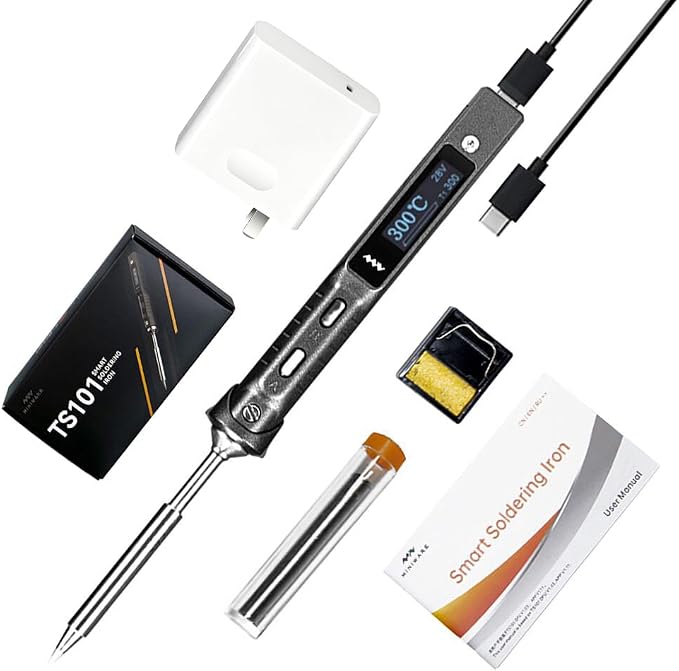
Miniware TS101

Quick 861DW
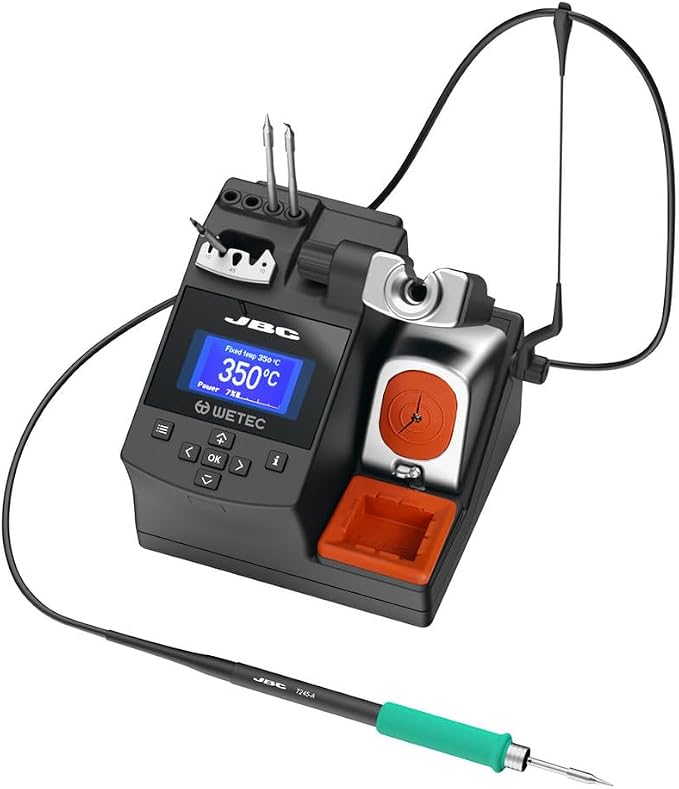
JBC CD-2BQF
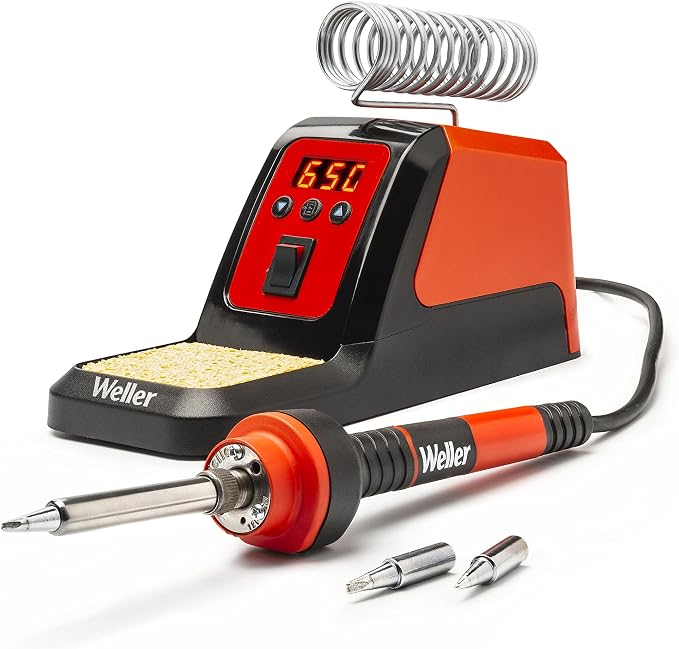
Weller WLC100
Technical Comparison of Leading Soldering Stations
Selecting the proper bench iron requires examining temperature parameters, power capabilities, and heating architectures. The following comparative overview outlines verified manufacturer specifications and performance parameters across the evaluated selections.
| Model | Temperature Range | Power Rating | Tip System | Key Features |
|---|---|---|---|---|
| Hakko FX-888D | 120F to 899F | 70 Watts | T18 Series | Digital calibration with thermal stability and durable housing design. |
| Weller WE1010NA | 200F to 850F | 70 Watts | ET Series | Password protection with automatic standby modes for tip preservation. |
| Yihua 939D+ III | 392F to 896F | 110 Watts | 902 Series | High wattage output with channel storage presets and iron storage. |
| Miniware TS101 | 122F to 752F | 65 Watts | TS Series | USB-C power delivery support with integrated OLED status readouts. |
| Quick 861DW | 212F to 932F | 1000 Watts | Nozzle Array | Dedicated hot air rework design with high volume laminar airflow. |
| JBC CD-2BQF | 190F to 840F | 130 Watts | C245 Series | Ultra-fast thermal response with intelligent sleep cartridge stand integration. |
| KSGER T12 | 302F to 896F | 72 Watts | T12 Integrated | Integrated heater cartridges with modular open firmware control algorithms. |
| Aifen A9 Pro | 212F to 842F | 120 Watts | C210 C245 | Rapid cartridge heating with handle-mounted temperature adjustment keys. |
| Yihua 8786D | 392F to 896F | 750 Watts | 900M Series | Dual station footprint combining an iron and hot air rework blower. |
| Weller WLC100 | Variable Analog | 40 Watts | ST Series | Stepless rotary analog control for entry level electrical hobby assemblies. |
Detailed Reviews: Top 10 Soldering Stations
Hakko FX-888D Digital Soldering Station Editor’s Choice
The Hakko FX-888D maintains its status as an industry benchmark due to exceptional thermal recovery and rigid build quality. Operating with a 70-watt ceramic heating element, it handles multi-layer circuit boards without substantial temperature drops.
The station utilizes Hakko T18 series tips, which offer thick copper cores and durable iron plating for extended working lifespans. Its compact cast-metal base provides stability on crowded workstations while minimizing bench space footprint.
Weller WE1010NA Digital Station
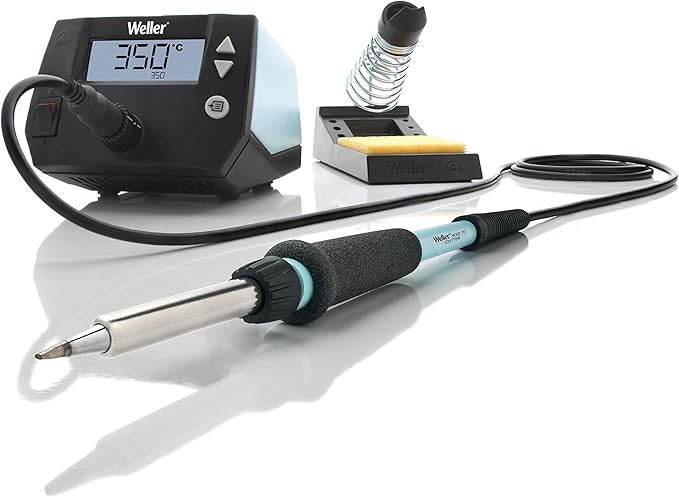
The Weller WE1010NA targets educational workshops and professional production cells requiring straightforward temperature management. Delivering 70 watts of power, this station heats efficiently and stabilizes temperature within tight parameters during continuous operation.
An intuitive liquid crystal display simplifies parameter adjustments and provides immediate visual confirmation of actual tip temperatures. The lightweight pencil iron reduces hand fatigue during repetitive wire harness assembly and circuit board prototyping.
Yihua 939D+ III Heavy-Duty Station
The Yihua 939D+ III provides 110 watts of heating power, accommodating heavy electrical connections and large copper traces. Its high thermal output minimizes dwell times on difficult ground planes when working with high-melting-point lead-free solder alloys.
Integrated channel storage presets allow operators to switch between different operational heat profiles with single key presses. The comprehensive front-panel display shows set parameters alongside real-time thermal readings for continuous oversight.
Miniware TS101 Smart Portable Station
The Miniware TS101 transforms modern field soldering through intelligent microprocessor regulation and compact cylindrical form factors. Powered via standard USB Power Delivery or direct DC barrel inputs, it operates equally well on benches or mobile toolkits.
Direct cartridge tip heating embeds the thermal sensor inside the soldering tip body, providing responsive heat-up cycles. An integrated screen conveys real-time power delivery rates, tip health, and operational statuses during joint formation.
Quick 861DW Hot Air Rework Station
The Quick 861DW functions as an essential station for surface-mount desoldering and component replacement. Producing 1000 watts of thermal capacity, it manages lead-free rework on heavy computer motherboards without stressing circuit boards.
A closed-loop sensor architecture regulates airflow volume and temperature independently across three programmable channels. The hot air gun switches into automatic cooling mode immediately upon placement into the magnetic cradle stand.
JBC CD-2BQF Heavy Duty Station
The JBC CD-2BQF represents top-tier engineering for demanding electronics rework and high-reliability aerospace soldering. Operating with advanced JBC heating technology, it transfers 130 watts directly through ultra-low-mass cartridge tips.
Thermal drop during contact with substantial ground planes is mitigated almost instantaneously through micro-sensor feedback. The stand incorporates quick tip extraction slots, enabling operators to switch tip geometries without waiting for cooling.
KSGER T12 STM32 OLED Station

The KSGER T12 brings integrated cartridge technology to hobbyists and independent electronics repair technicians. Built around an STM32 microcontroller, the base unit processes temperature readings rapidly to deliver steady thermal performance.
Using widely available T12-style tips, the iron heats from cold to working temperatures in brief cycles. The OLED screen presents operating voltage, board temperature, and power delivery percentages for thorough diagnostic control.
Aifen A9 Pro Precision Soldering Station
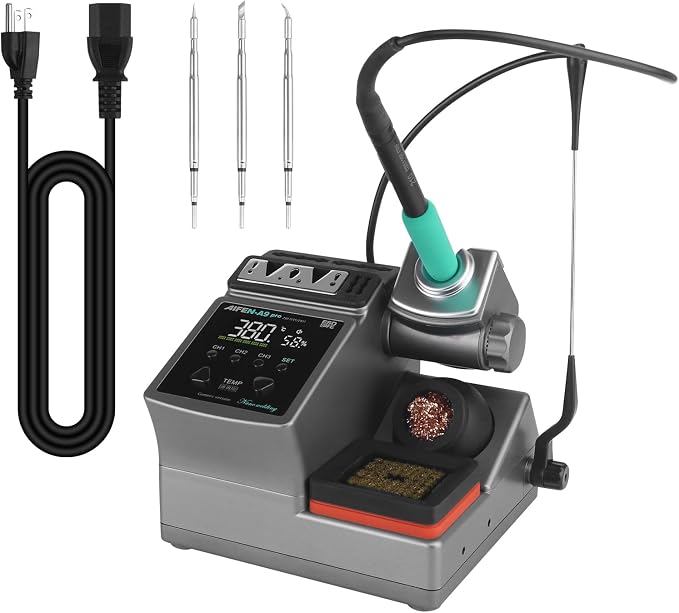
The Aifen A9 Pro accommodates precision micro-soldering tasks by supporting modern cartridge standard handles such as C210 and C245. Delivering up to 120 watts of power, it transfers heat directly to tiny component pads without thermal lag.
Temperature controls built into the handle itself allow technicians to adjust set points without moving their eyes from the microscope. The sleep stand triggers immediate thermal drop-offs to prevent tip oxidation during idle bench periods.
Yihua 8786D 2-in-1 Rework and Soldering Station

The Yihua 8786D combines a traditional soldering iron and a hot air blower wand within a unified dual-function desktop enclosure. This consolidated setup serves electronics hobbyists seeking to conserve workspace without sacrificing rework functionality.
Dual digital displays present operational metrics for both tools simultaneously, enabling smooth transitions between through-hole assembly and surface-mount repair. Independent switches allow running either tool in isolation to minimize power consumption.
Weller WLC100 Analog Soldering Station
The Weller WLC100 serves as an entry-level analog workhorse for basic hobby assemblies, stained glass craft, and broad wiring projects. Its step-free rotary potentiometer provides direct power modulation without complex menu navigation.
Equipped with a 40-watt pencil iron and standard ST series tips, it supplies reliable performance on simple single-layer boards. The built-in pencil rest and natural cleaning sponge offer a tidy work environment for makers getting started.
Essential Technical Factors for Soldering Workstations
Choosing an appropriate station involves matching device specifications to planned electronics assembly demands. Understanding how heating elements transfer energy into components preserves printed circuit boards from unnecessary thermal damage.
- Power Rating and Thermal Delivery: Stations ranging from 65 to 130 watts maintain continuous heat on massive power traces without requiring dangerously high baseline temperatures.
- Integrated Cartridges versus Separate Tips: Integrated heating cartridges unite the sensor and element directly at the tip for instantaneous thermal responsiveness.
- Closed-Loop Temperature Calibration: Digital microprocessor feedback monitors tip surface temperature hundreds of times per second to prevent heat sag during soldering.
- Electrostatic Discharge Protection: True electrostatic discharge compliance routes residual static voltage safely to ground, safeguarding delicate semiconductor gates.
- Component Ecosystem and Replacement Supply: Reliable platforms support standard tip profiles such as chisel, bevel, and conical geometries across sustained manufacturing cycles.
Opting for stations with sleep-mode stands reduces tip oxidation significantly. Lowering idle temperatures prolongs the life of lead-free soldering tips and reduces replacement overhead.
Equip the Electronics Workbench for 2026
Review technical specifications and verify current inventory across certified distribution channels to secure reliable hardware.
Matching Soldering Equipment to Specific Bench Tasks
Different electronics operations present distinct thermal and geometric hurdles. Differentiating between light circuit board prototyping and intense rework procedures ensures appropriate equipment selection.
Electronics Assembly and Prototyping
- Digital closed-loop stations with moderate wattage outputs
- Standard passive ceramic heating elements or T12 cartridges
- Chisel tips for consistent surface contact across through-hole pins
- Static-dissipative silicone cables for unimpeded hand movement
Surface-Mount Rework and Micro-Repair
- Ultra-fast cartridge stations using micro-geometry tips
- Integrated hot air blowers with controlled laminar airflow
- Integrated sleep stands for tip preservation under microscope work
- Fine curved conical and knife tips for multi-pin drag soldering
Top Soldering Station Recommendations for 2026
The Hakko FX-888D stands as the top overall choice for balanced reliability, thermal recovery, and tip longevity. Professionals handling delicate surface-mount devices benefit most from the JBC CD-2BQF or Aifen A9 Pro, while the KSGER T12 and Miniware TS101 deliver outstanding performance for field kits and hobby workbenches.
![Best soldering accessories and PCB holders from AliExpress [year] on an organized electronics repair workbench](https://bestfindo.com/wp-content/uploads/2026/04/best-soldering-accessories-holders-from-aliexpress-2026.jpeg)
![Best soldering materials and flux from AliExpress [year] on an electronics repair workbench](https://bestfindo.com/wp-content/uploads/2026/04/best-soldering-materials-flux-from-aliexpress-2026.jpeg)
![Best soldering tips for JBC and Hakko stations from AliExpress [year] displayed on electronics workbench](https://bestfindo.com/wp-content/uploads/2026/04/best-soldering-tips-for-jbc-hakko-2026-aliexpress-picks.jpeg)
![Best soldering irons and stations from AliExpress [year] on an electronics workbench](https://bestfindo.com/wp-content/uploads/2026/04/best-soldering-irons-stations-from-aliexpress-2026.jpeg)